In this article (9 sections)
A patio is the part of the backyard you use most, so it pays to plan it around how you live rather than around a catalog photo. This guide walks through the decisions we talk over with homeowners across Southeastern Massachusetts before a hardscape patio is built: how big to make it, which surface to choose, how patterns and borders change the look, what goes underneath, and how steps, walls and features fit in.
If you want the build itself, step by step, with timelines and price ranges, read our companion article on paver patio installation in Easton, MA. This one is about getting the design right first.
Start With How You Will Use the Space
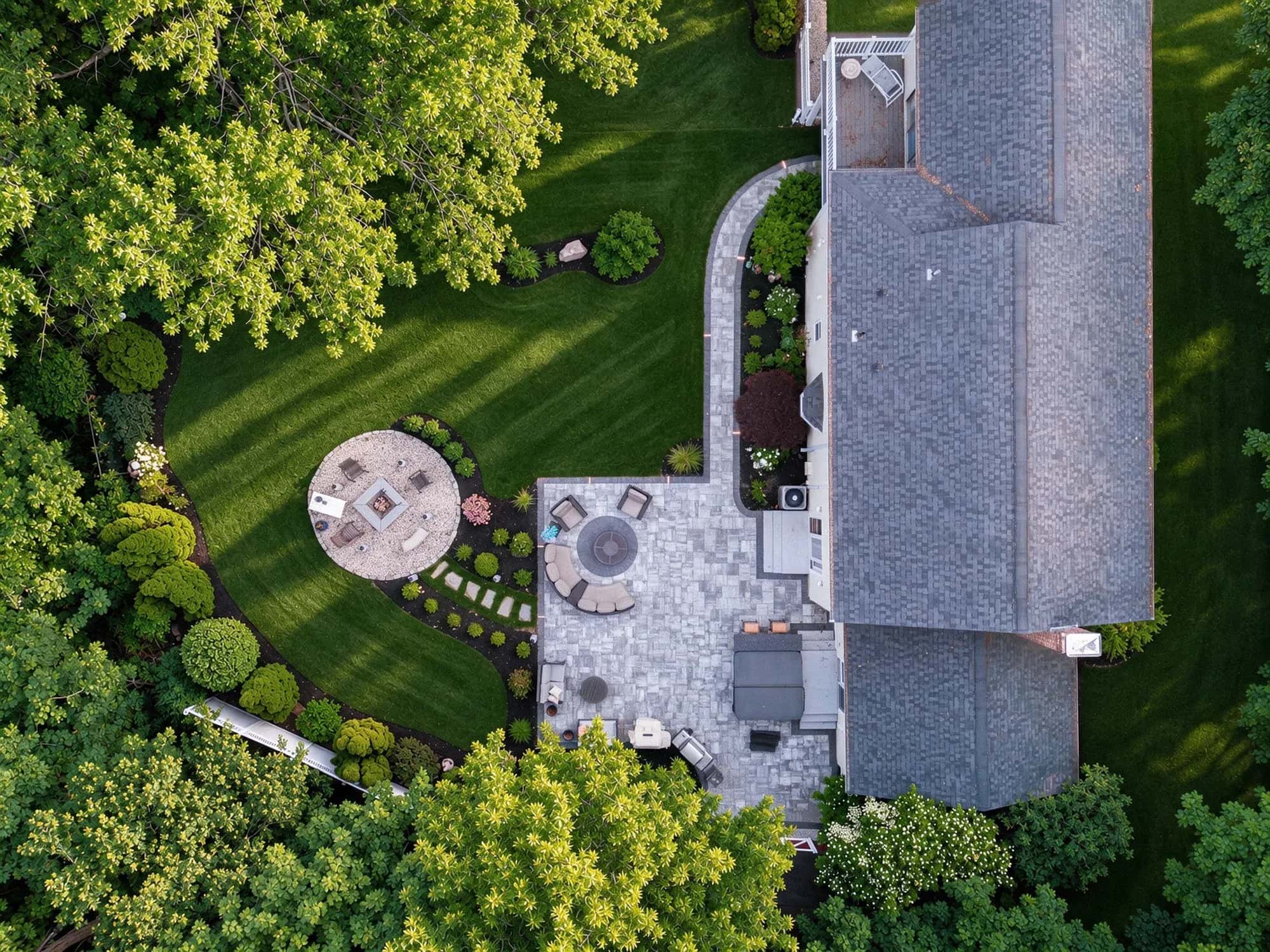
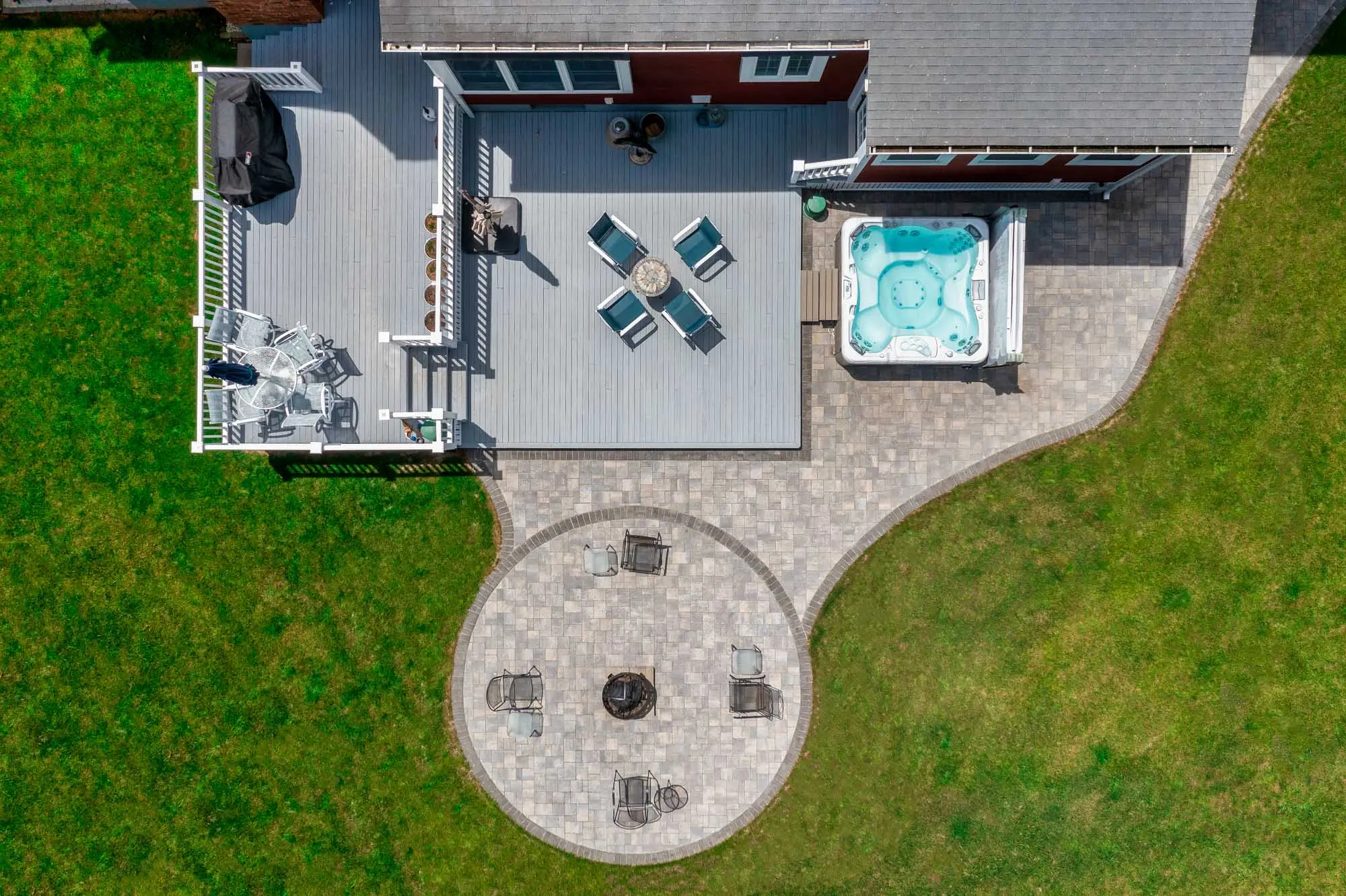
Make a short list of what the patio needs to hold: a dining table, a lounge set, a grill, a fire pit, a hot tub. Each one needs room around it. As a rule of thumb, a table for six needs an area of roughly 12 by 12 feet so chairs can pull out without dropping off the edge, and a lounge group needs about the same. Two zones side by side usually feel better than one big square.
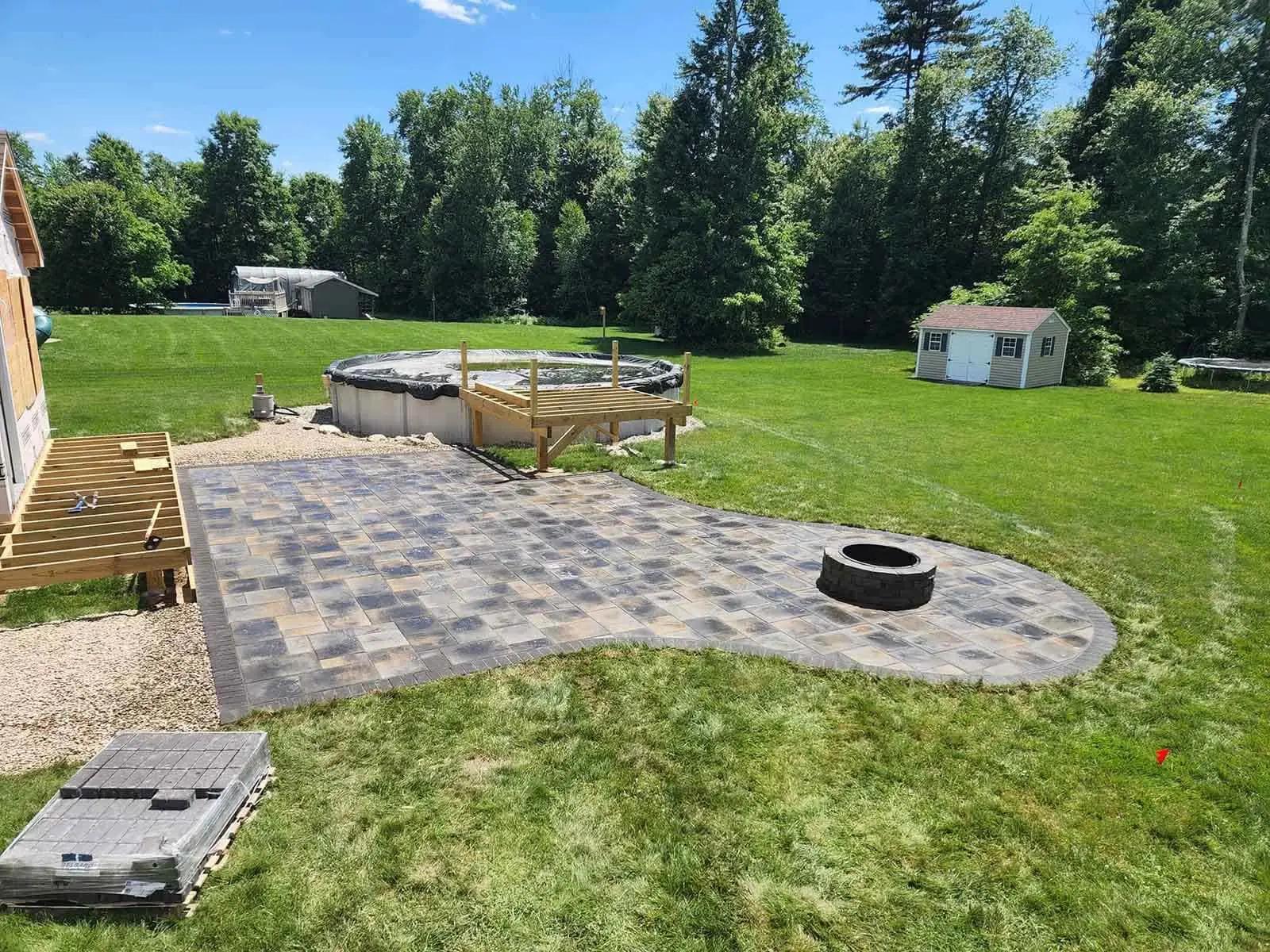
Think about the route too. The patio should connect cleanly to the back door, the lawn and anything beyond it, like a pool or a shed. That is where walkways and steps come in, and planning them now avoids a patchwork later. Before settling on a layout, ask:
- Sun and shade: where will you actually want to sit in the morning and in the late afternoon?
- Views and privacy: what do you want to look at, and what would you rather screen?
- Drainage: where does water run today when it rains hard?
Choosing a Surface: Concrete Pavers, Natural Stone or Porcelain
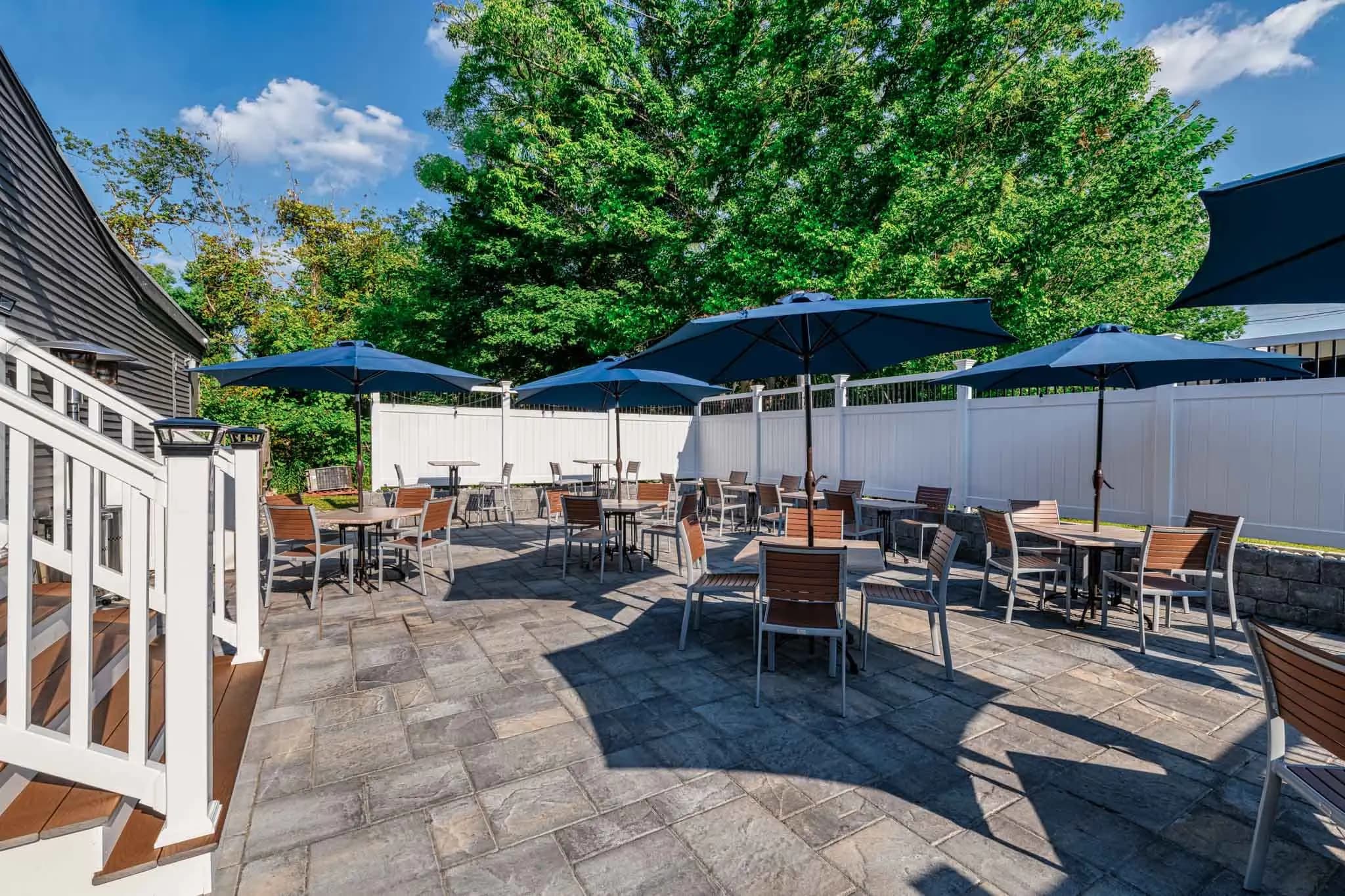
Concrete pavers are the most popular choice we install. They are made to tight tolerances, come in hundreds of shapes, colors and textures, and handle freeze-thaw cycles well because the joints let the surface flex. We install pavers from Belgard, Cambridge, Unilock and Ideal. Textured slabs can pass for bluestone at a lower cost, and smooth large-format slabs give a clean, modern look.
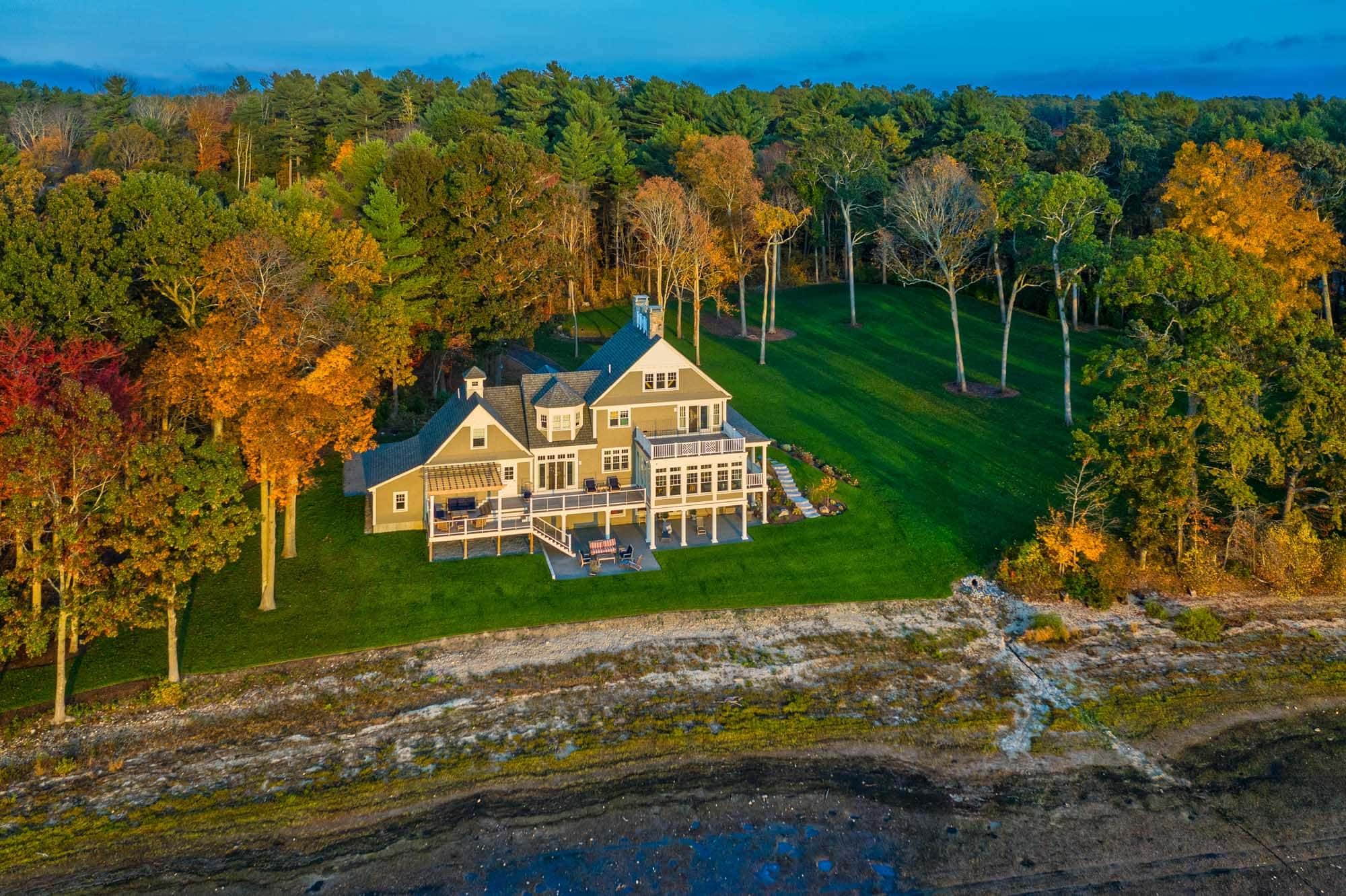
Natural stone such as thermal bluestone, granite and flagstone brings color variation no factory can copy. Each piece is different, so it costs more and takes more skill to lay, but it ages well. Thermal-finished bluestone has a consistent, non-slip surface that works well around pools. Our waterfront bluestone patio in Pembroke shows how natural stone settles into a coastal landscape.
Outdoor porcelain is a dense, low-maintenance option for modern designs and pool decks. It resists staining and fading, and it pairs well with natural stone borders.
There is no single best material. The right one depends on the style of the house, your budget and how much variation you like. Full-size samples seen in daylight help, and a 3D rendering shows how they will look in your own yard.
Patterns, Borders and Inlays
The laying pattern changes how a patio feels. Running bond and stacked patterns read as calm and modern. Herringbone locks together tightly, which is why it is a favorite for driveways and busy paths. Random patterns that mix several stone sizes look the most like natural stone.
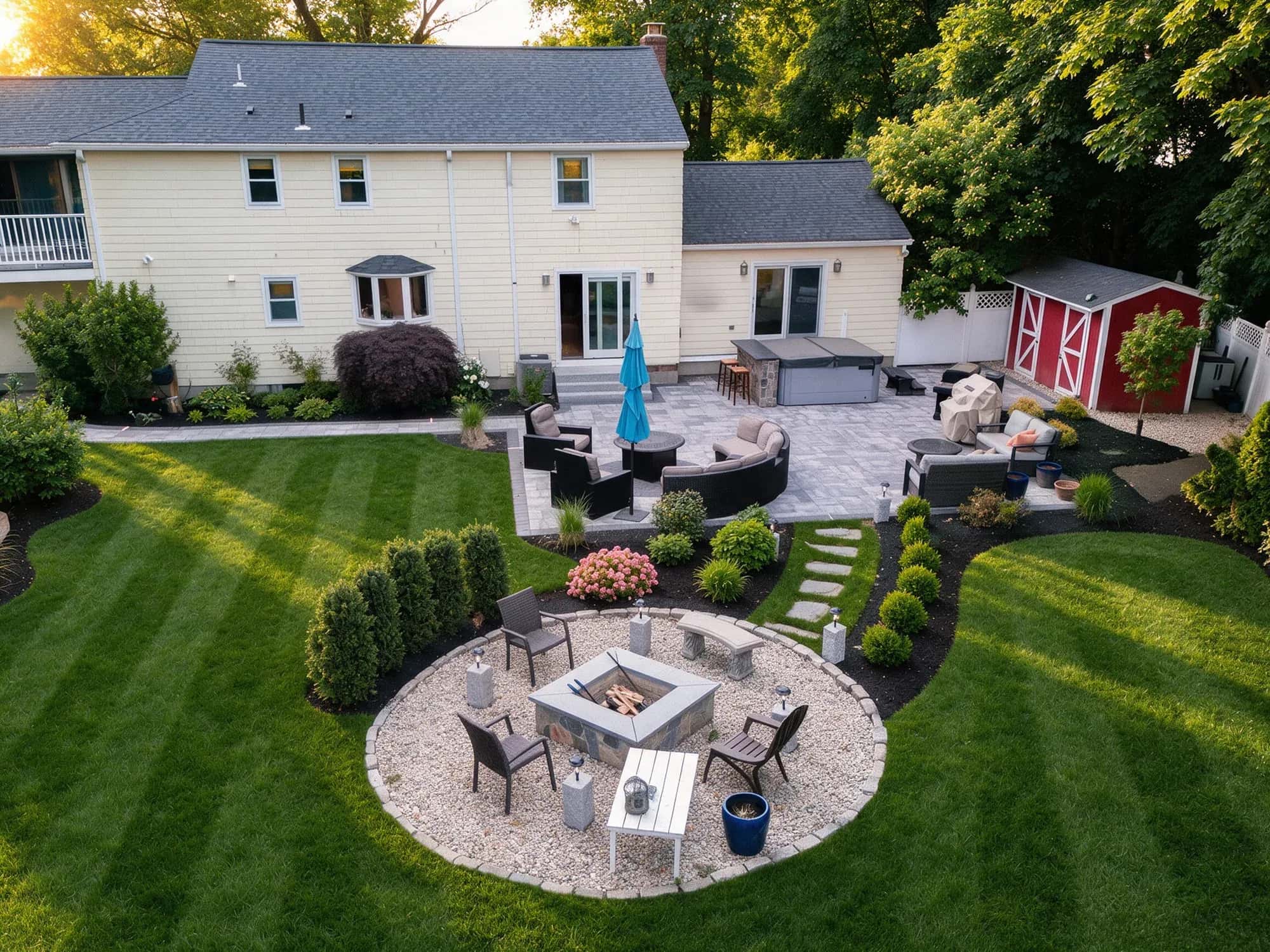
A border frames the field and gives the edge a finished line, and a contrasting color makes it stand out. In our Westwood patio and fire-pit garden, a light Cambridge Ledgestone field is edged in a darker Coal border that ties the patio, walkway and fire-pit circle together. Circles and inlays add a focal point: the North Easton paver driveway is centered on a circular stone pattern in Belgard pavers.
What Is Underneath Matters Most
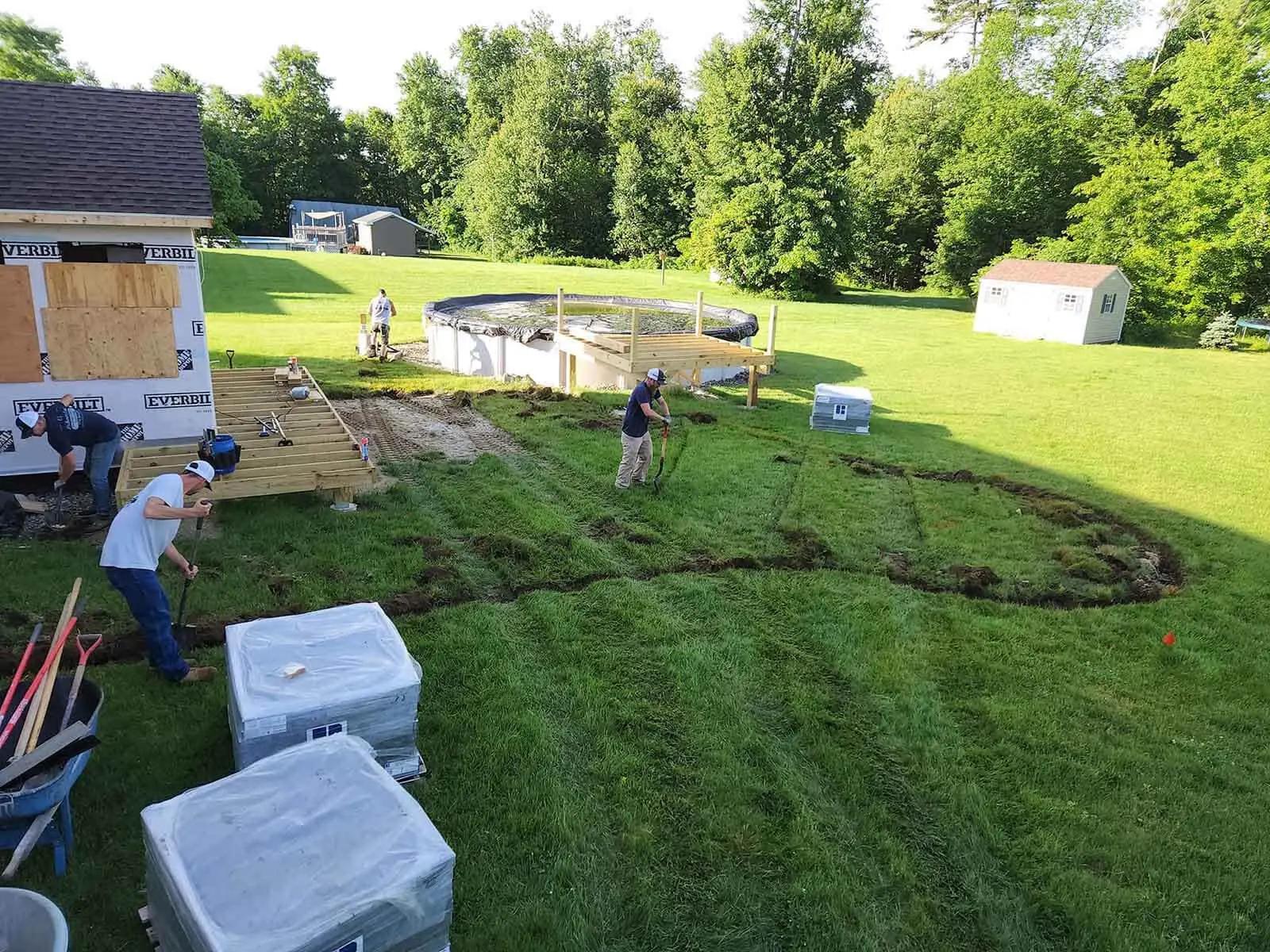
Most patio failures start below the surface. A patio that lasts through New England winters needs:
- A compacted gravel base, dug to the right depth for your soil and compacted in layers.
- A gentle pitch away from the house, so rainwater runs off instead of toward the foundation.
- Solid edge restraints that keep the pavers from creeping apart over time.
- Polymeric sand in the joints, which locks the pavers together and discourages weeds and ants.
Where drainage is tight, or local rules limit runoff near wetlands, a permeable paver system lets rainwater pass through the joints into the base instead of running off the surface.
Levels, Steps and Walls
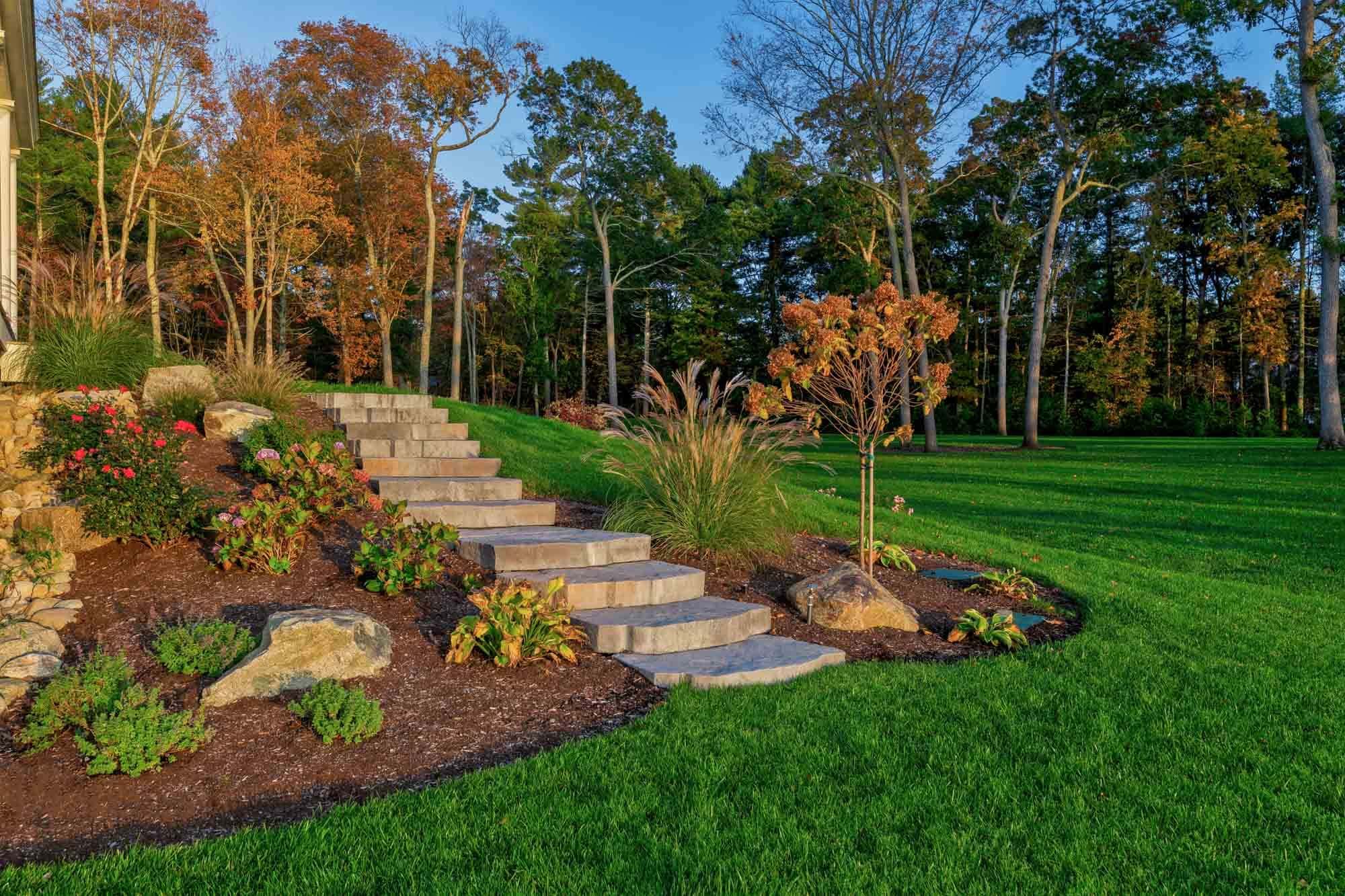
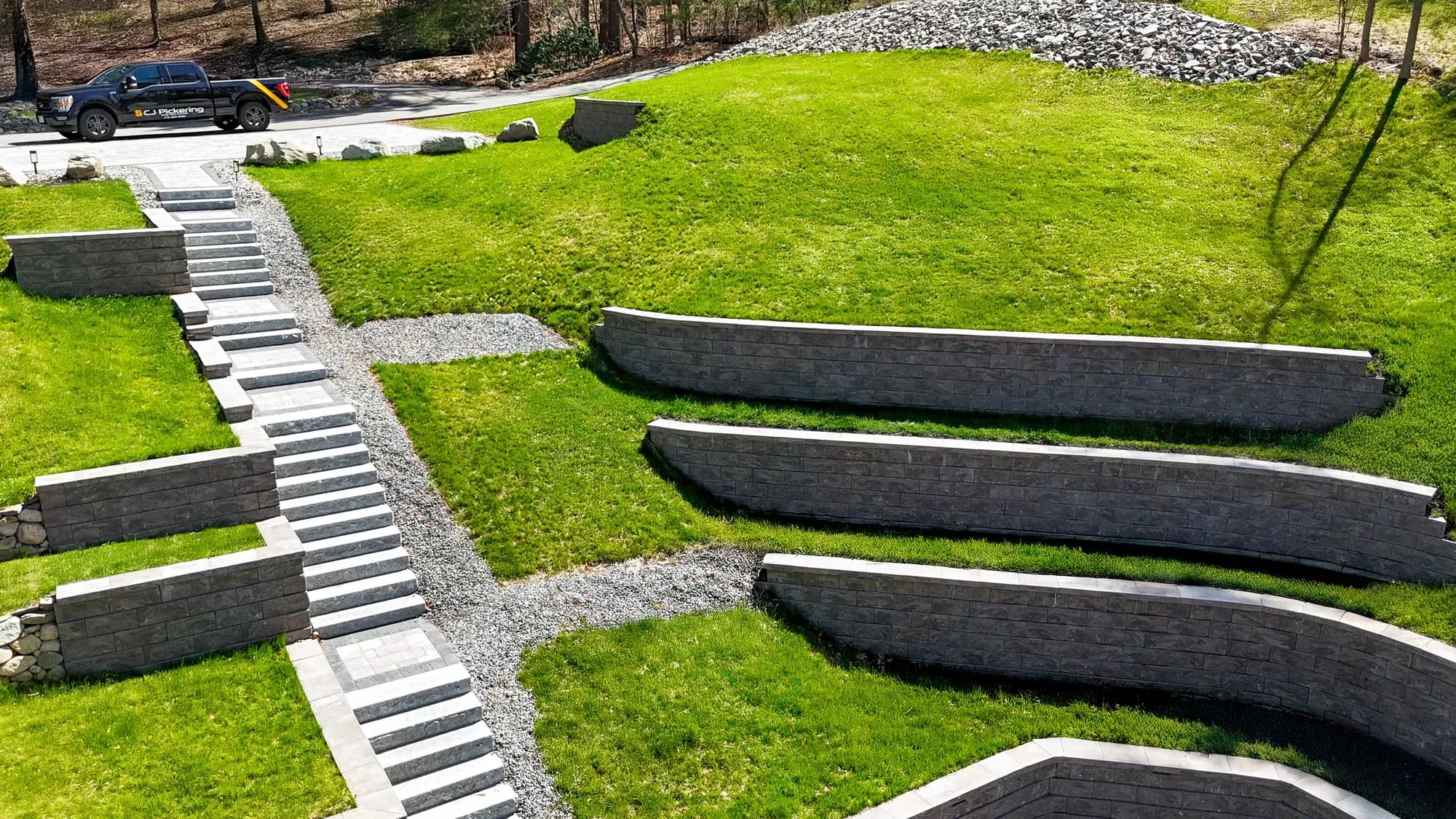
Few backyards are flat. Instead of fighting a slope, use it: a raised terrace near the house with steps down to a lower patio creates two distinct spaces and a better view. Retaining walls hold the grade and can double as seating, and wide, shallow steps feel safer and more generous than narrow ones.
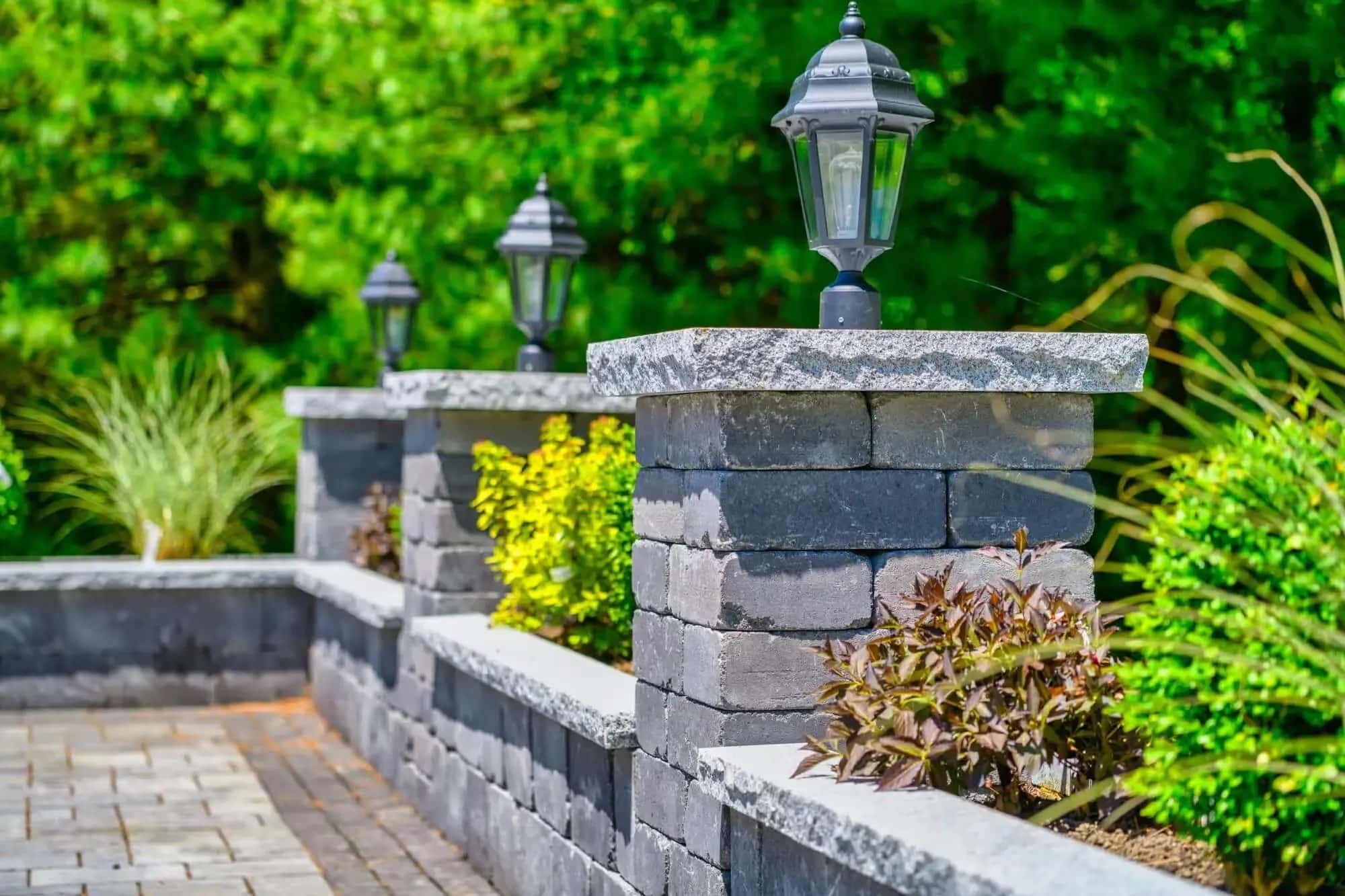
Our Mansfield plunge pool terrace steps down from a raised pool patio to a fire-pit patio below, held by Cambridge block walls. On a Taunton waterfront hillside, terraced walls and long stair runs bring a steep slope down to the house. For wall systems we also install Keystone retaining wall products.
Adding Fire, Kitchens, Lighting and Water
Features are easiest to add when the patio is planned around them, with gas, power and drainage run before the pavers go down.
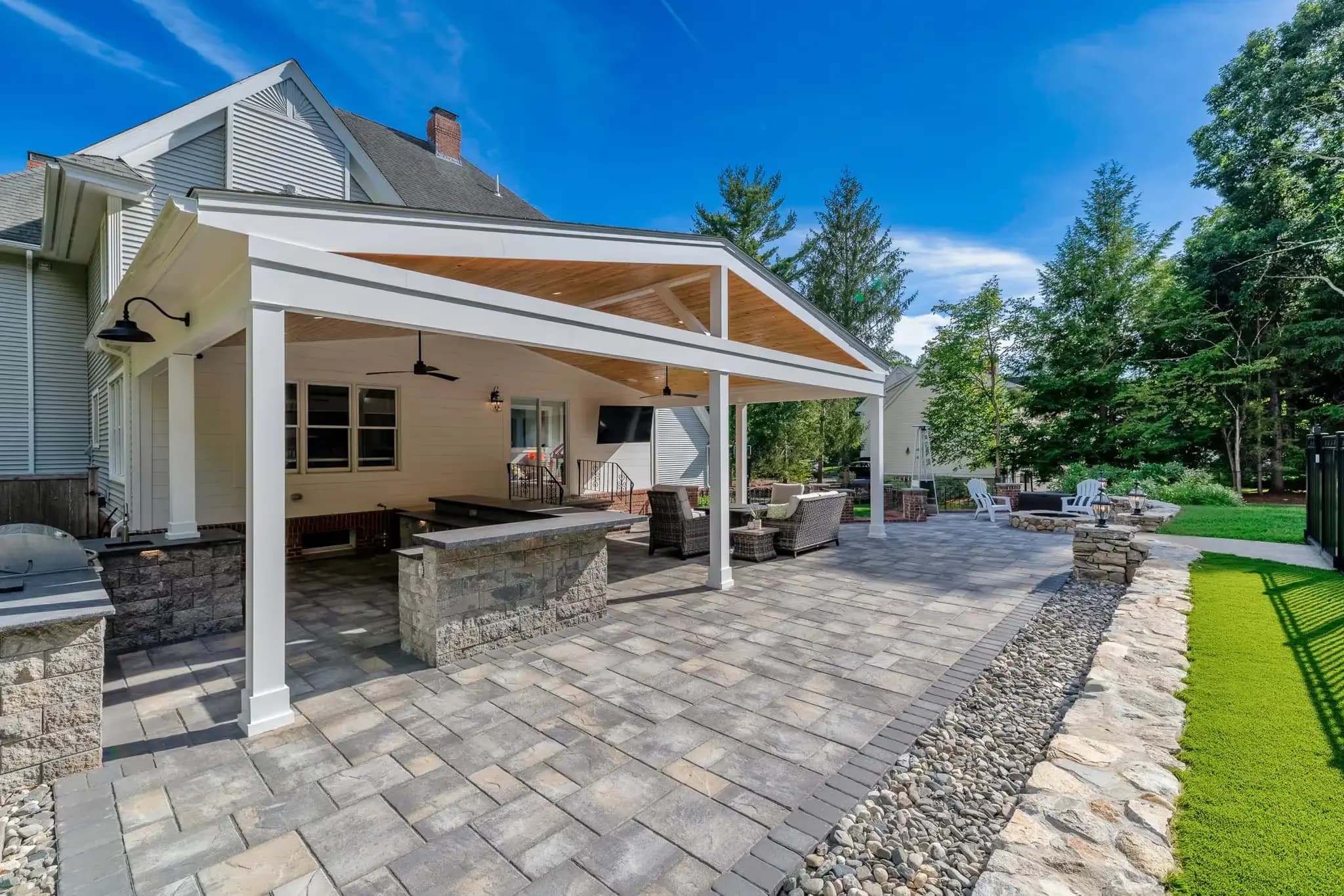
- Fire pits and fireplaces give the patio a focal point and stretch the season into fall. See choosing an outdoor fireplace or fire pit and our fire pits and seating walls.
- Outdoor kitchens need their own footprint and utilities. Read outdoor kitchen installation in Massachusetts and outdoor kitchen design tips.
- Outdoor lighting on steps, walls and paths makes the patio safe and usable after dark.
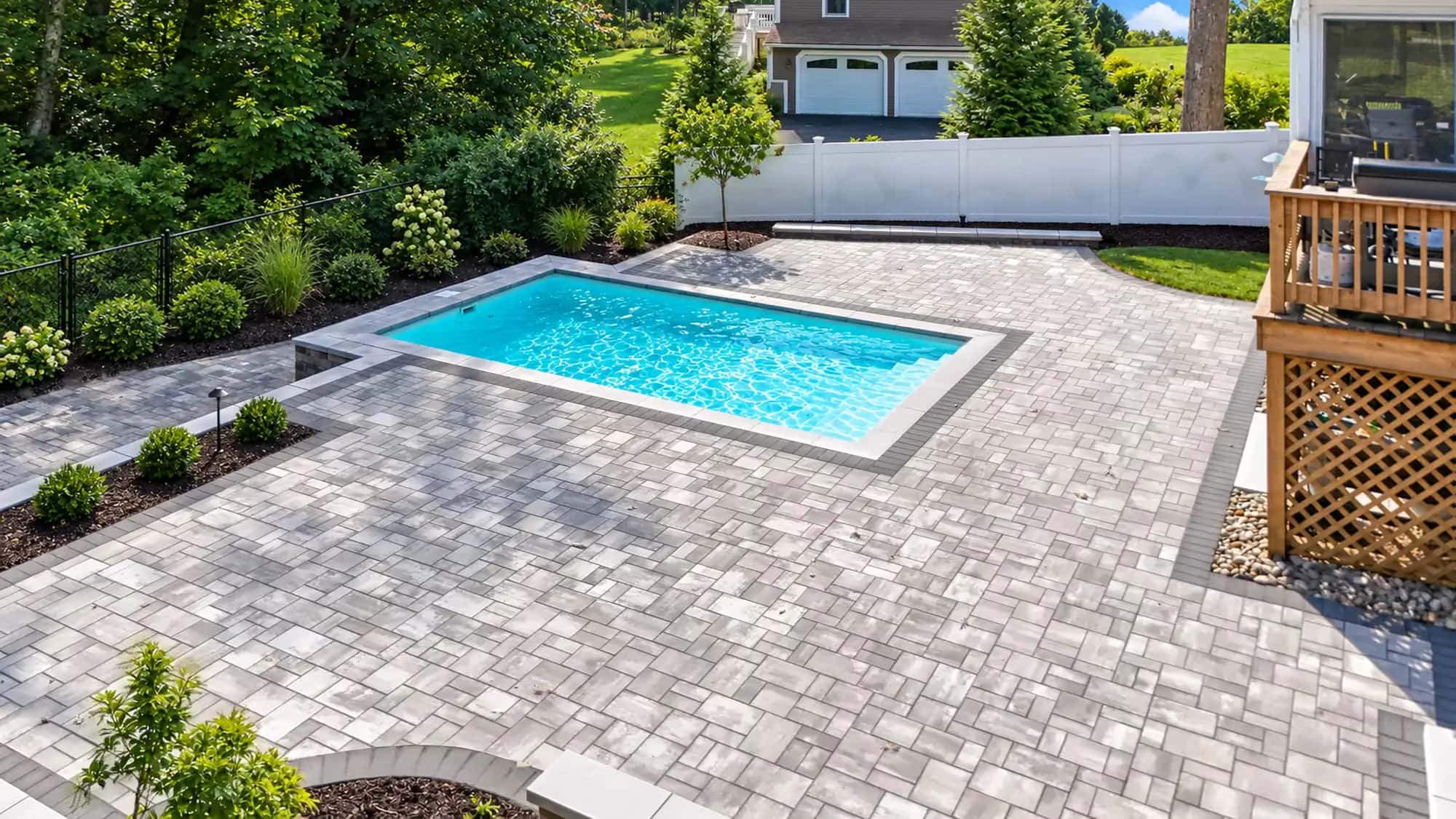
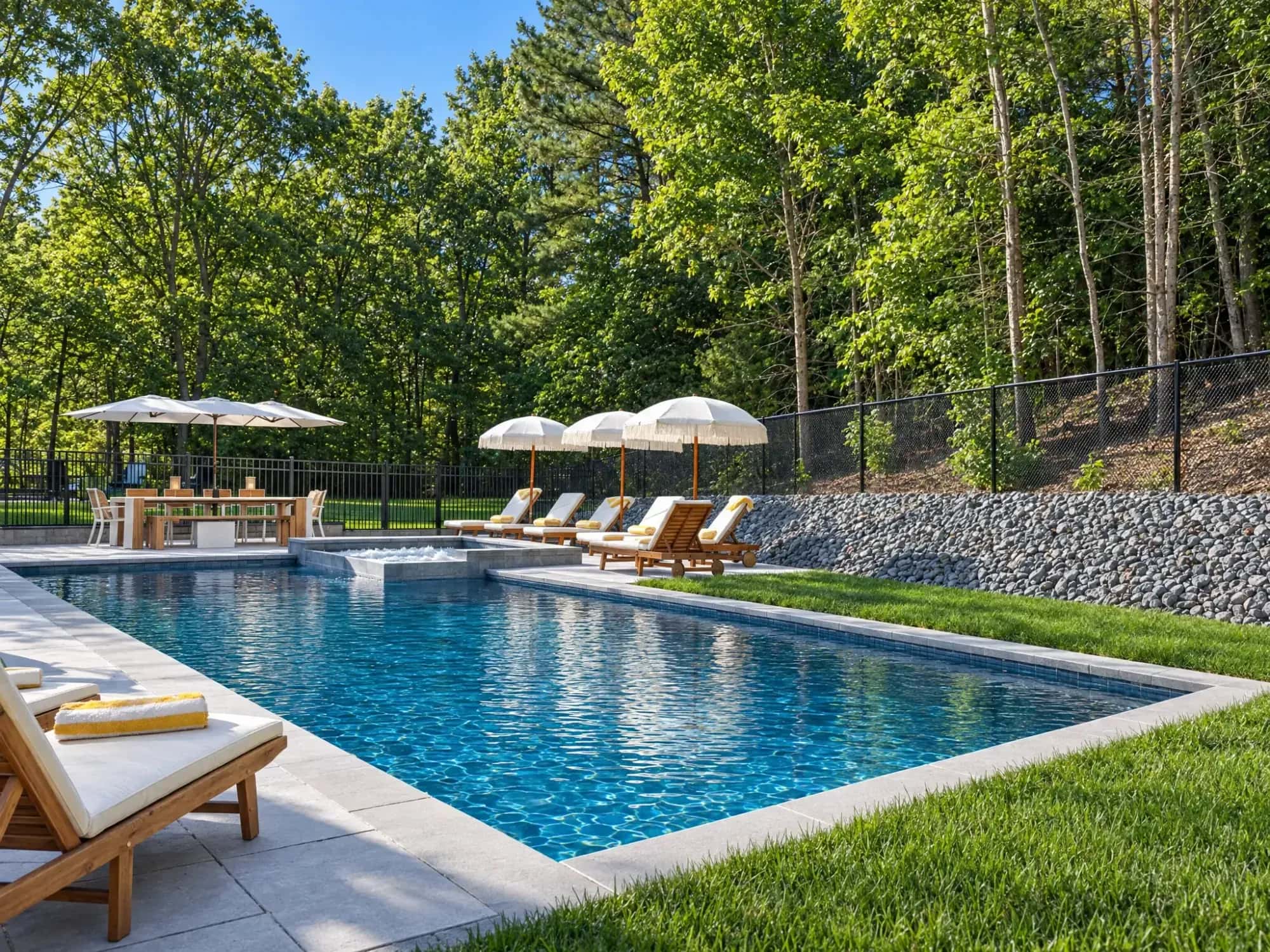
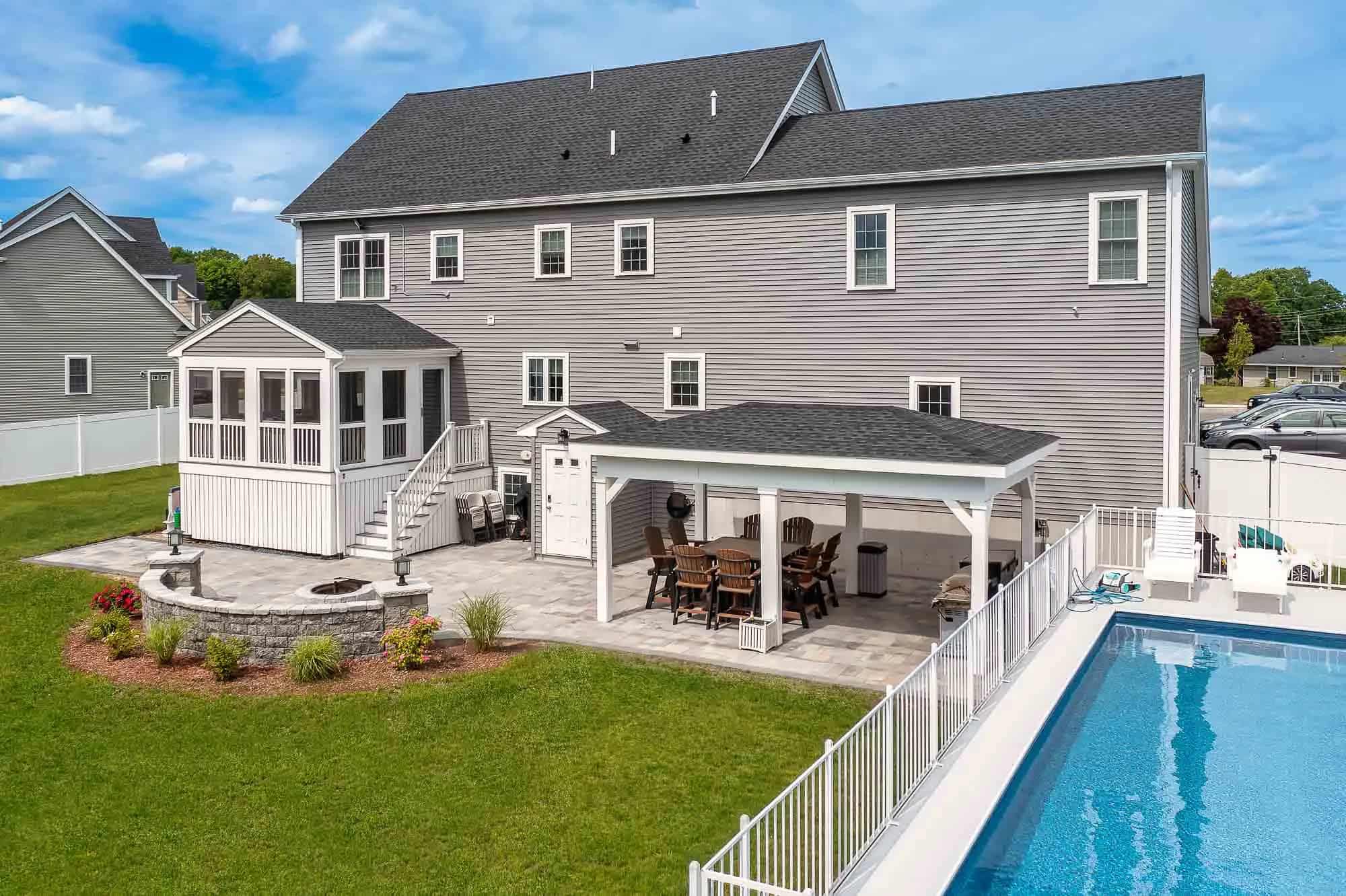
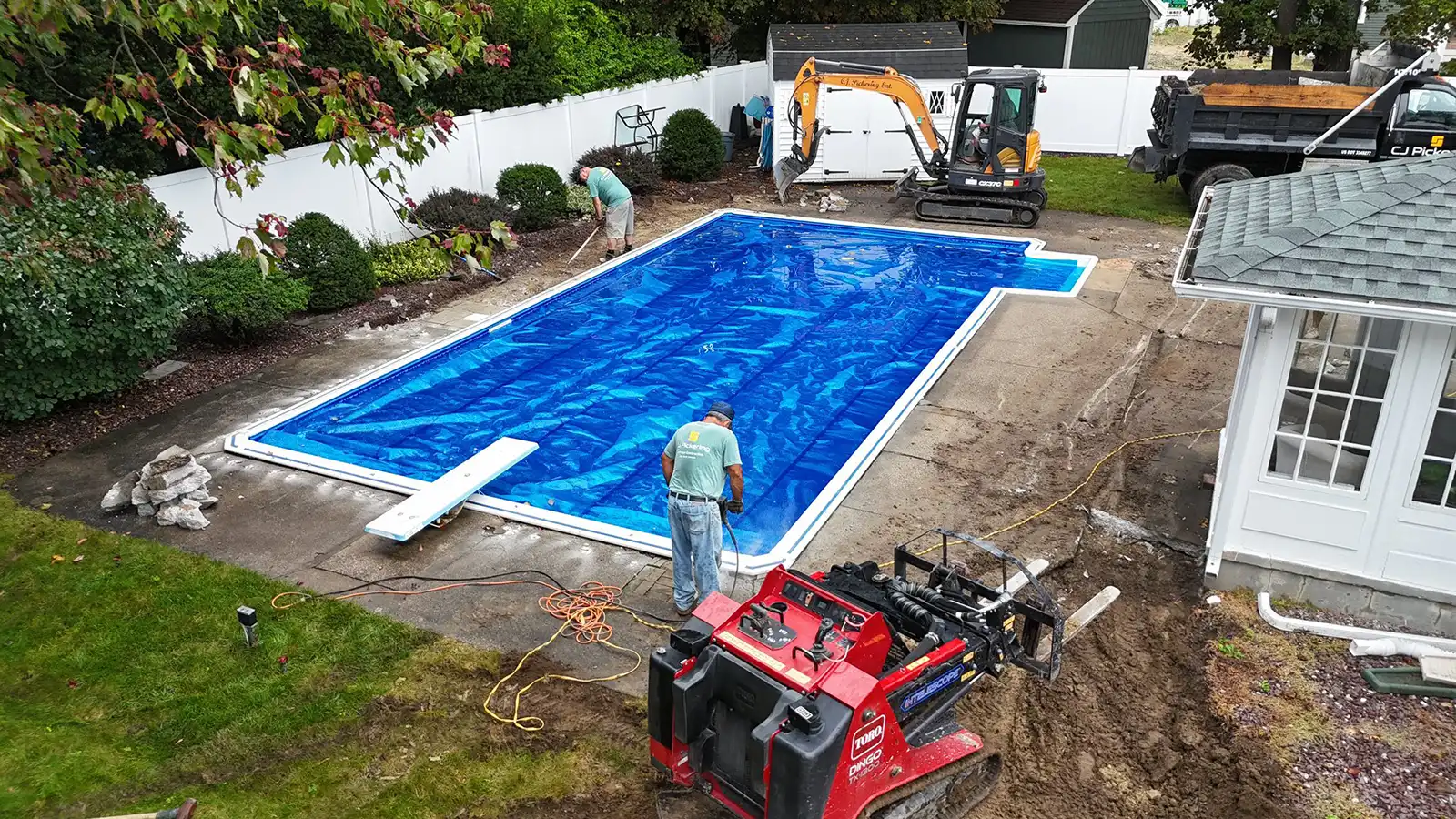
- Pools and spas: a patio and pool deck designed together read as one space. Our fiberglass pool guide explains how we plan both.
Caring for Your Patio
A paver or stone patio needs little upkeep, but a few habits keep it looking new:
- Sweep off leaves and rinse the surface a few times a year.
- Top up the joint sand if gaps appear, usually after the first winter.
- Reseal every few years if you want to refresh the color and resist stains.
- In winter, use a plastic shovel blade and go easy on rock salt.
Why the Installer Matters
Two patios built from the same pavers can perform very differently, because the real work is in the base, the drainage and the details. Cody Pickering is a Belgard Master Craftsman, the highest level of certification Belgard gives its installers, and every CJ Pickering patio is backed by a 5-year craftsmanship warranty.
Every project starts with a free consultation and a 3D rendering, so you can see the layout, materials and colors in your own yard before work begins. Browse our featured projects for more ideas, or read what our clients say.
Plan Your Patio
CJ Pickering Enterprises designs and builds patios in Easton, Mansfield, Westwood and towns across Southeastern Massachusetts. Call 774-362-0482 or request a free quote to start planning yours.