Planning an outdoor kitchen in Massachusetts? Design ideas, cost breakdowns, and material tips for New England weather from a South Shore hardscape expert.
If you’ve been dreaming about cooking outdoors in your South Shore backyard, you’re not alone. Outdoor kitchens have become one of the most requested backyard upgrades among Massachusetts homeowners — and for good reason. A well-designed outdoor kitchen extends your living space, adds real value to your home, and makes every warm-weather gathering better.
At CJ Pickering Enterprises, we’ve helped homeowners across Easton, Canton, Stoughton, Mansfield, and Bridgewater turn that dream into a finished, functional space. Here’s everything you need to know before getting started.
Why Outdoor Kitchens Are Booming in Massachusetts
Outdoor living took off during the pandemic, and the trend hasn’t slowed down. Homeowners across Southeastern Massachusetts are investing in their backyards more than ever — not just patios and fire pits, but full outdoor kitchens with built-in grills, countertops, refrigerators, and lighting.
The numbers back it up. According to the National Association of Realtors, an outdoor kitchen can recoup between 50% and 100% of its cost at resale, depending on the build quality and local market. In the South Shore real estate market, premium outdoor living spaces are a genuine selling point.
Here in Easton, we’ve seen demand surge. Homeowners are treating their backyards as an extension of their interior living space — and the outdoor kitchen is the centerpiece of that investment.
Is an Outdoor Kitchen Worth It in New England?
This is the first question we hear from almost every homeowner we consult with. The short answer: yes, absolutely.
Massachusetts gives you roughly five to seven months of comfortable outdoor living, from April through October. That’s enough time to make an outdoor kitchen a regular part of your routine — weekend cookouts, summer dinners, fall gatherings around the fire.
The key is using the right materials. When an outdoor kitchen is built correctly for our freeze-thaw climate, the structure holds up for decades with minimal maintenance. Properly sealed granite countertops, concrete block framing, and Belgard pavers can handle a Massachusetts winter without issue.
On the appliance side, propane is the most practical fuel choice for New England. It works in cold weather, doesn’t require a gas line extension from the house, and lets you control your setup independently of your home’s systems. If you already have natural gas at the house, that’s also a solid option — a licensed plumber can run the line during the build.
Key Components of an Outdoor Kitchen
Every outdoor kitchen is different, but most builds include some combination of the following:
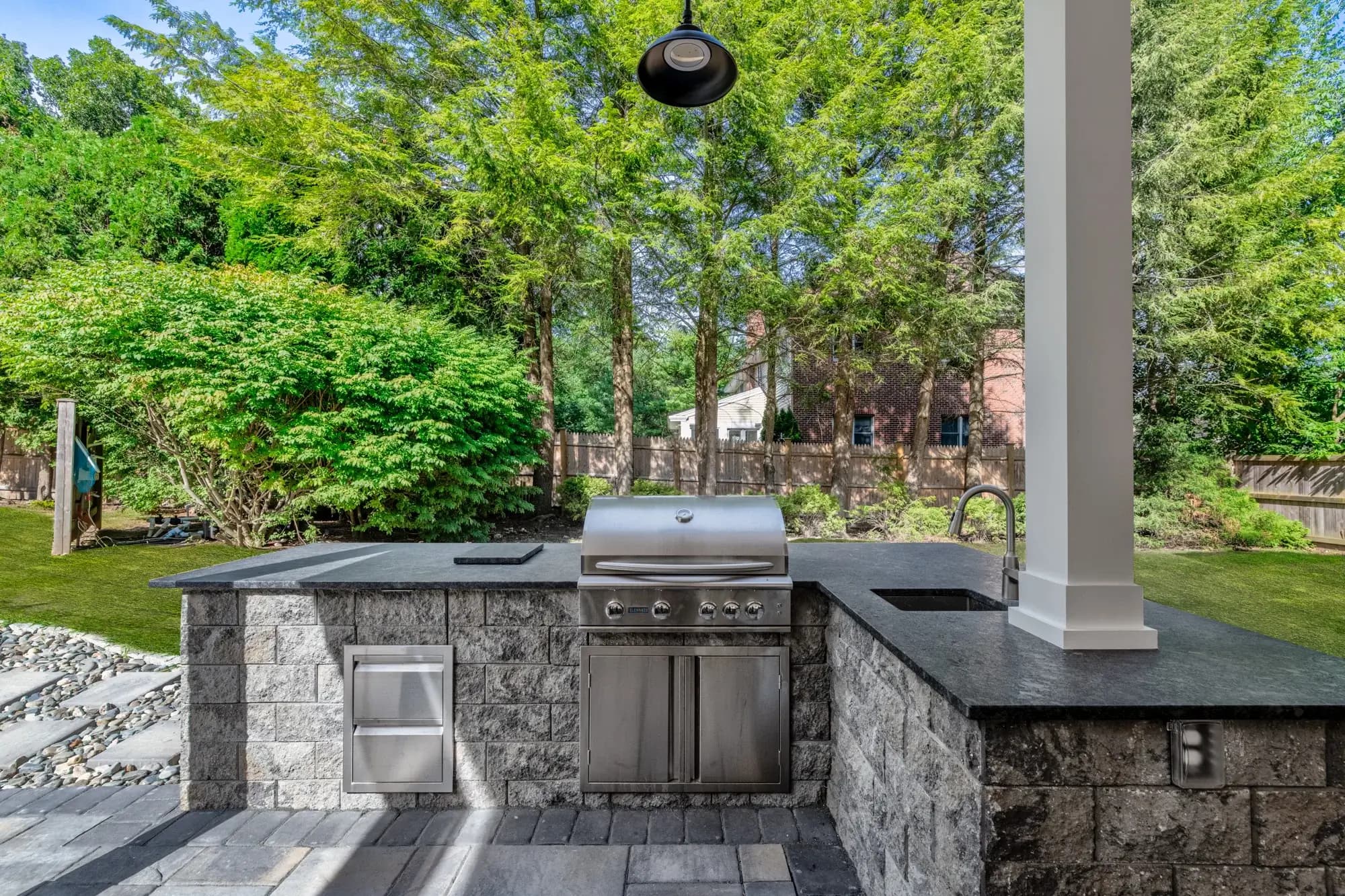
Built-in grill. The heart of any outdoor kitchen. Gas and propane grills from brands like Lynx, DCS, or Weber Summit are built for outdoor-only use and deliver professional performance.
Countertops. This is where the kitchen takes on its personality. Granite and quartzite are the top choices for New England weather — more on that in the next section. We’ve partnered with Quartzandgranitepro on past builds to deliver beautiful, locally fabricated stone countertops that hold up and look incredible.
Cabinetry and storage. Weatherproof polymer or stainless steel cabinets keep tools, utensils, and accessories protected year-round.
Outdoor refrigerator and sink. A dedicated outdoor fridge keeps drinks and prep ingredients close. An undermount sink with a shutoff valve (essential in our climate) makes cleanup easy without running inside.
Pizza ovens and side burners. These extras elevate the cooking experience. A built-in pizza oven or side burner station turns a standard grill setup into a true culinary space.
Outdoor lighting. A kitchen that looks great during the day should look even better at night. CJ Pickering’s outdoor lighting design service — from under-counter LEDs to pathway and overhead lighting — ties the whole space together and extends your time outside after dark.
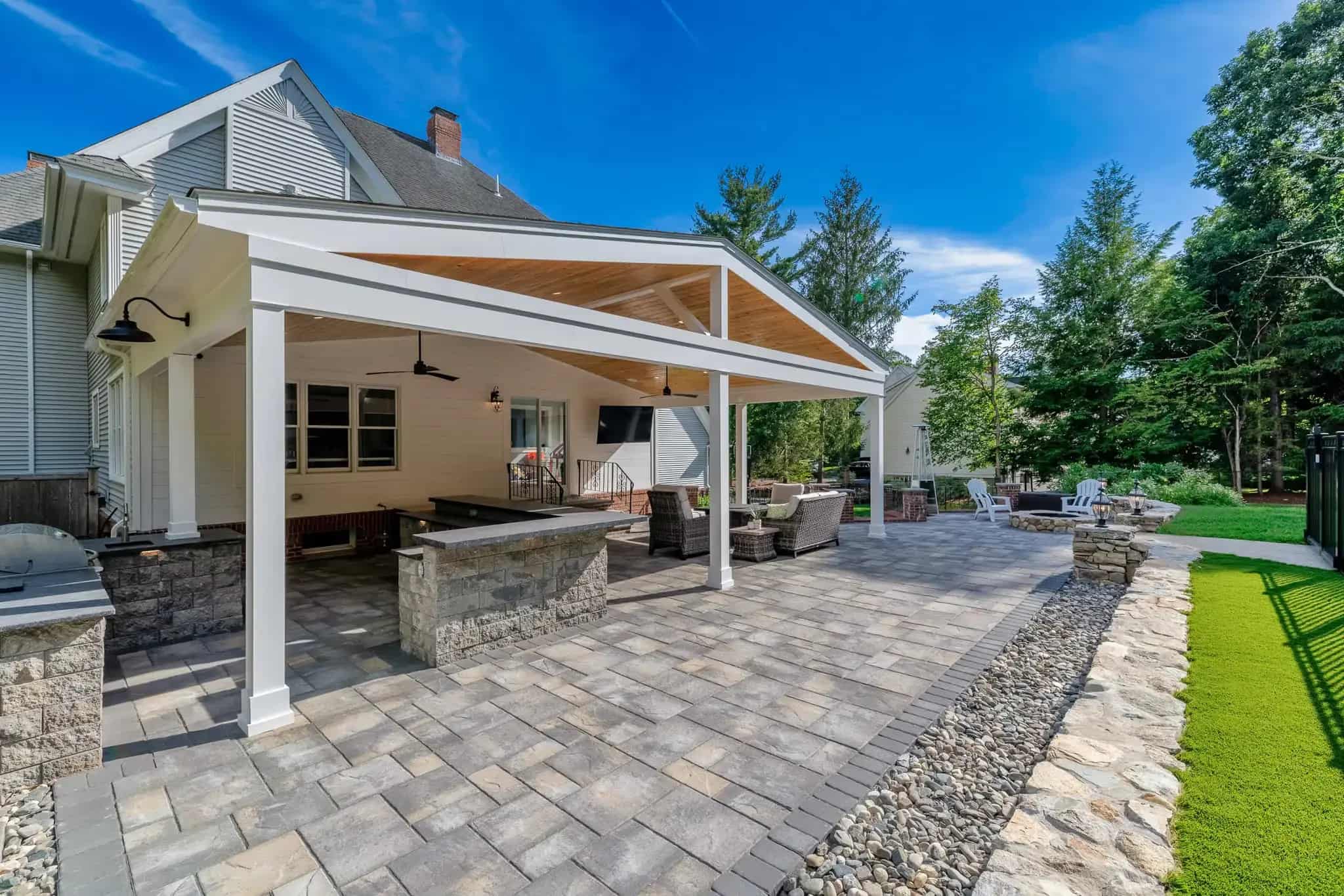
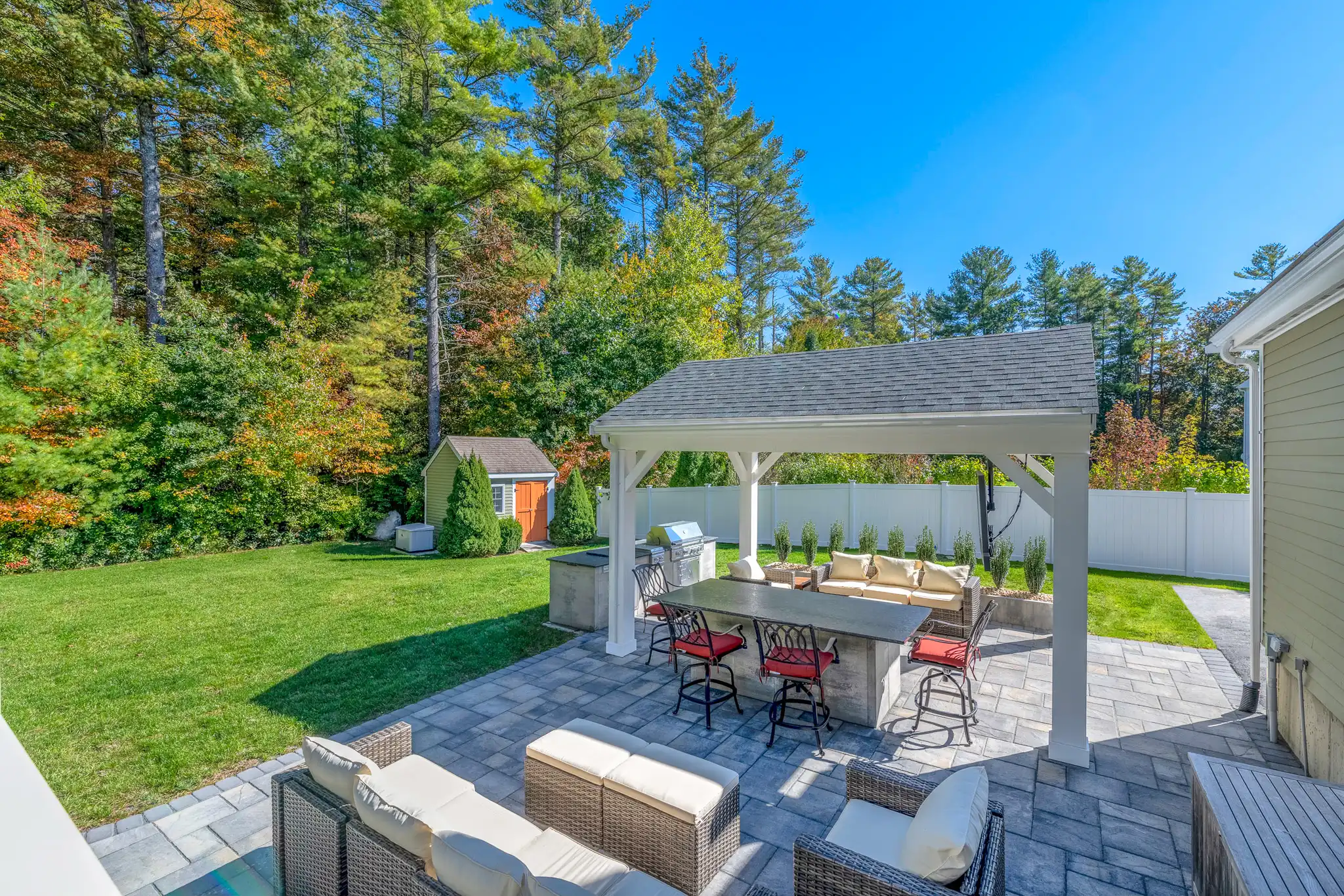
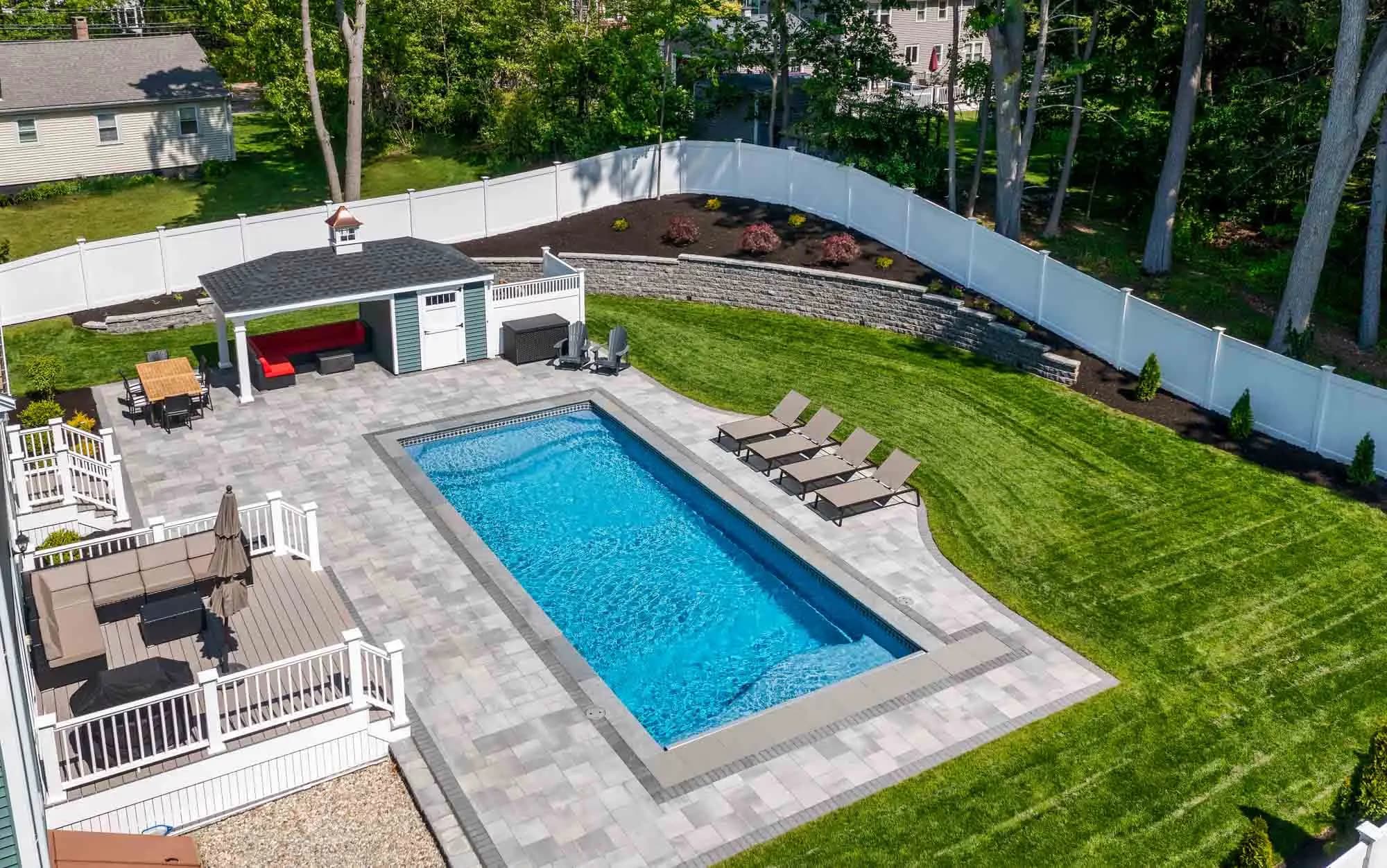
Seating walls and surrounding patio. The kitchen doesn’t exist in isolation. We almost always design it alongside a new or updated patio, integrated seating walls, and sometimes a fire pit area. Treating it as one cohesive project produces a far better result.
Choosing the Right Materials for New England Weather
Material selection is where a lot of DIY and budget builds go wrong. In a climate like ours, you can’t just pick what looks good — it has to survive.
Countertops: Granite and quartzite are the gold standard for outdoor kitchens in Massachusetts. Both are dense, non-porous (when properly sealed), and handle freeze-thaw cycles without cracking. Avoid materials like marble or tile grout, which absorb moisture and deteriorate quickly outdoors.
Framing: We build our outdoor kitchen frames with concrete block or steel stud construction — never wood. Wood holds moisture, rots, and invites pests. Concrete block is essentially maintenance-free and provides a solid base for stone veneers and heavy appliances.
Flooring: Belgard pavers are our preferred choice for outdoor kitchen flooring and surrounding patios. As a Certified Belgard Master Craftsman, Cody Pickering brings over a decade of hands-on expertise with these products. Belgard’s concrete pavers flex slightly with ground movement, which makes them far more resistant to cracking in freeze-thaw conditions than poured concrete slabs.
Appliances: Look for appliances that are UL-rated for outdoor use. Stainless steel grades matter — 304-grade stainless resists rust better than cheaper alternatives.
Sealers and weatherproofing: All countertops and stone surfaces should be sealed annually in a New England climate. We walk every client through a simple maintenance plan at project completion.
The Design Process: From 3D Rendering to Build Day
The best outdoor kitchen builds start well before anyone breaks ground. Here’s how we approach it at CJ Pickering:
Consultation. We start with a site visit to understand your space, your goals, and your budget. We talk through how you use your backyard, how many people you typically cook for, and what features matter most to you.
3D rendering. Before any work begins, we create a 3D rendering of your outdoor kitchen so you can see exactly what the finished product will look like. This step eliminates surprises and lets you make design changes before they become costly.
Trade partner coordination. Complex builds often involve specialty trades — stone fabricators, electricians, plumbers, and appliance suppliers. We coordinate all of it. Our collaboration with partners like Quartzandgranitepro and MP & Son Construction means you get a seamless experience, not a scheduling headache.
Permitting. Most outdoor kitchens in Massachusetts require a building permit, especially if they include gas lines, electrical work, or structural elements. We handle the permit process and know exactly what local building departments expect.
Timeline. A typical outdoor kitchen build takes two to four weeks, depending on size and complexity. Weather can be a factor in early or late season builds, but we plan accordingly to keep projects on schedule.
How Much Does an Outdoor Kitchen Cost in Massachusetts?
Outdoor kitchen cost in Massachusetts varies widely based on size, materials, and appliances. Here’s a realistic breakdown:
- Basic setup ($8,000–$15,000): A concrete block frame, single built-in grill, basic countertop, and simple paver base. Great for homeowners who want a functional starter kitchen.
- Mid-range ($20,000–$40,000): Premium granite or quartzite countertops, stainless appliances, refrigerator, sink, outdoor lighting, and a full patio integration. This is the most popular range for South Shore homeowners.
- High-end custom ($50,000+): Full outdoor living suite with pizza oven, built-in smoker, multiple appliances, custom masonry, pergola or shade structure, integrated lighting, and seating walls.
Factors that affect your final cost include: square footage of the kitchen, site prep requirements (excavation, grading, drainage), electrical and gas line runs, appliance brands, and countertop material.
We also understand that this is a significant investment. Ask us about financing options that can make your project more accessible without compromising on quality.
Working with a Hardscape Contractor vs. a General Contractor
An outdoor kitchen sits at the intersection of hardscape, masonry, and outdoor living — and that’s exactly where a hardscape-first contractor excels.
A general contractor manages many types of projects. A hardscape contractor like CJ Pickering specializes in how structures interact with the ground, the elements, and the outdoor environment. That expertise shows in the base preparation, the drainage planning, the paver layout, and the way the kitchen integrates with the rest of your backyard.
When you hire CJ Pickering, you get one team managing your patio, kitchen, lighting, and seating walls together. That means better integration, cleaner execution, and a finished project that looks like it was designed as a whole — because it was.
When interviewing any contractor, ask these questions: Are you licensed and insured in Massachusetts? Can I see examples of completed outdoor kitchen projects? Do you offer 3D design renderings? Do you manage permitting? Who handles the specialty trades?
Start Planning Your Outdoor Kitchen This Spring
Spring is the busiest season for outdoor kitchen installation Massachusetts homeowners — and project slots fill up fast. If you want your kitchen ready for summer, the time to start the conversation is now.
CJ Pickering Enterprises offers a free consultation and 3D rendering so you can see your finished backyard before committing to a single dollar. Owner Cody Pickering, a Certified Belgard Master Craftsman with over 10 years of experience, personally oversees every project from design through final walkthrough.
We serve Easton, Canton, Stoughton, Mansfield, Bridgewater, and surrounding communities throughout Southeastern Massachusetts and the South Shore.
Call us at 774-362-0482 or visit cjpickeringent.com to schedule your free consultation today.
Don’t wait until the warm weather is already here. The best outdoor kitchens in the neighborhood got started in the spring — yours should be next.