Thinking about a paver patio in Easton, MA? Learn about Belgard designs, installation costs, and what to expect from a Belgard Master Craftsman.
If you’ve been thinking about turning your backyard into a real outdoor living space, you’re not alone. Homeowners across Easton, Stoughton, Canton, Mansfield, and Bridgewater are investing in paver patios at a higher rate than ever before. This guide covers everything you need to know — from design options and real cost figures to how the installation process works and what to look for in a contractor.
Why Easton Homeowners Are Investing in Paver Patios
The outdoor living trend has taken hold across Massachusetts, and the South Shore is no exception. Homeowners want more than a lawn — they want functional, beautiful outdoor spaces where they can cook, relax, and entertain. A paver patio is one of the most popular ways to get there.
South Shore yards come with their own set of considerations. Lot sizes vary widely, drainage can be tricky in low-lying areas, and New England weather puts any outdoor surface through its paces. A well-designed patio has to look great in July and hold up through a Massachusetts winter.
Spring is the prime planning season in Southeastern Massachusetts. If you want your patio done by summer, the time to start the conversation is now. Many reputable contractors in the area book out weeks — sometimes months — in advance once the ground thaws.
What Are Paver Patios (And Why Not Concrete)?
Pavers are individual units — made from concrete, natural stone, or clay brick — that interlock to form a patio surface. Unlike poured concrete, they are installed as a flexible system, which makes a significant difference in New England’s climate.
Massachusetts sees serious freeze-thaw cycles every winter. When water gets under a poured concrete slab and freezes, it expands and cracks the slab. Pavers flex with the ground movement and rarely crack under the same conditions. If a single paver does shift or chip, it can be lifted and replaced without disturbing the rest of the surface.
Pavers also offer a far wider range of aesthetics than concrete. Colors, textures, patterns, and sizes can be mixed to create anything from a classic colonial look to a sleek modern terrace. And when it comes to maintenance, a quality sealed paver surface is easy to clean and holds its color for years.
Belgard is widely recognized as one of the top hardscape brands in North America, offering a full line of paver products built specifically for performance and visual appeal. According to Belgard’s own contractor program documentation, becoming a Belgard Master Craftsman — the highest level of certification the company offers — requires at minimum five years of installation experience, completion of an ICPI (Interlocking Concrete Pavement Institute) training course, a five-year workmanship guarantee, and installation of significant project volume each year. Cody Pickering of CJ Pickering Enterprises holds this designation, which puts him among a small group of contractors in the region who have earned that level of recognition.
Popular Paver Patio Designs for Massachusetts Homes
Natural Stone Look Belgard’s textured concrete pavers — products like Lafitt Rustic Slab and Cambridge Cobble — replicate the look of natural bluestone or flagstone without the price premium or fragility. These are a popular choice for colonial and Cape-style homes throughout the South Shore.
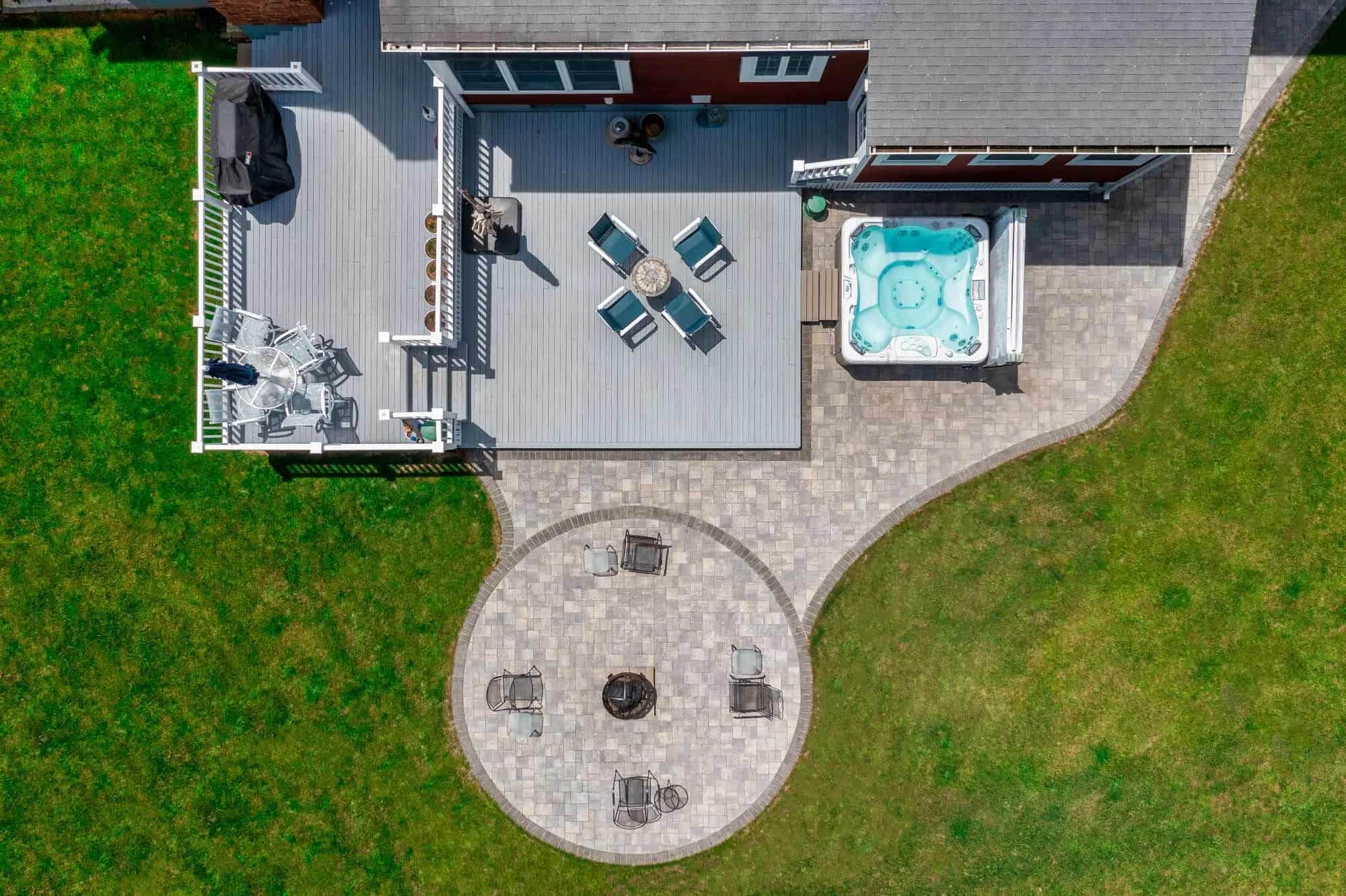
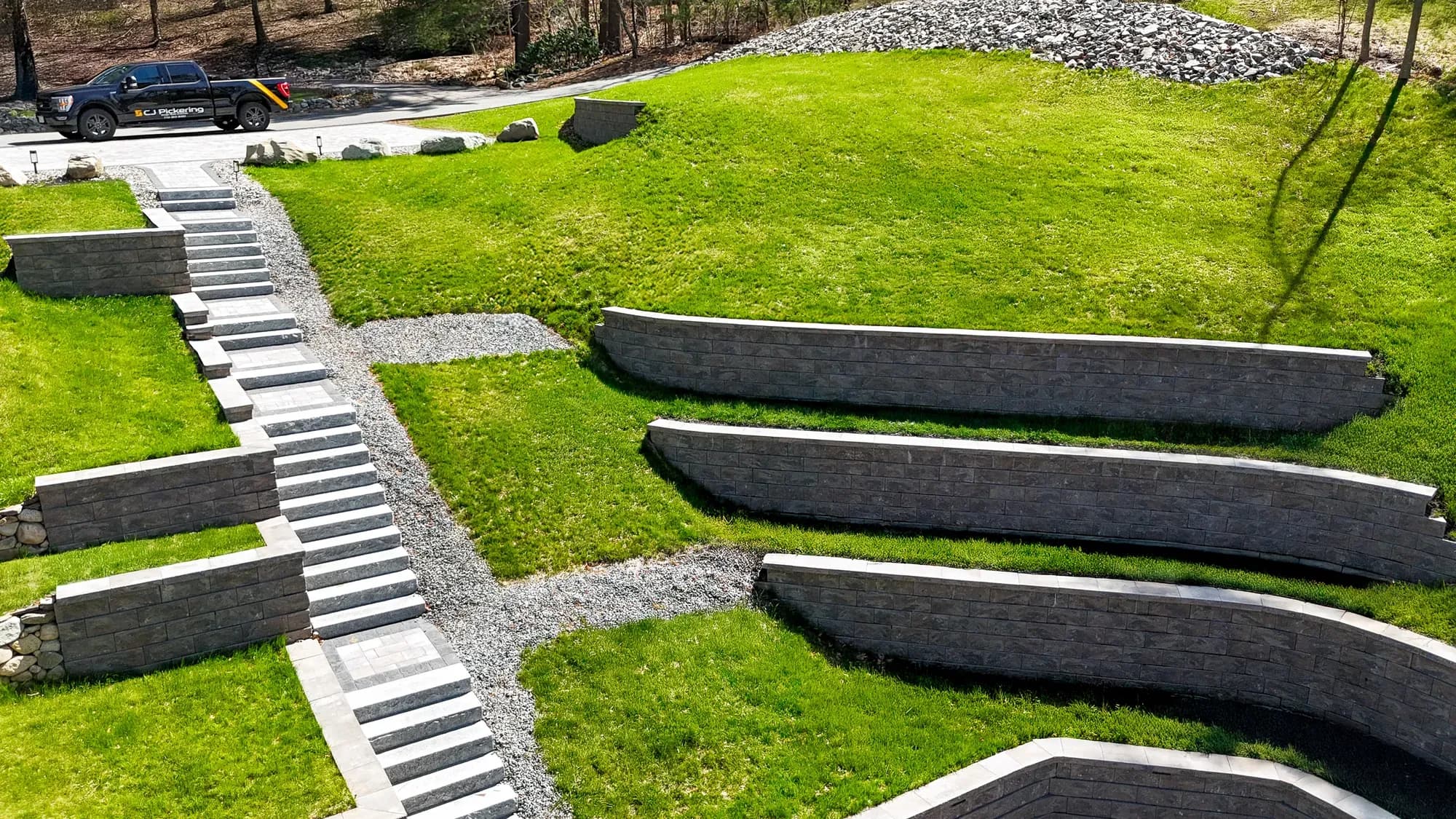
Multi-Level Patios Sloped backyards in Easton and surrounding towns often become beautiful assets when handled with a multi-level design. Raised terraces, steps, and retaining walls can all be integrated with matching pavers for a cohesive look.
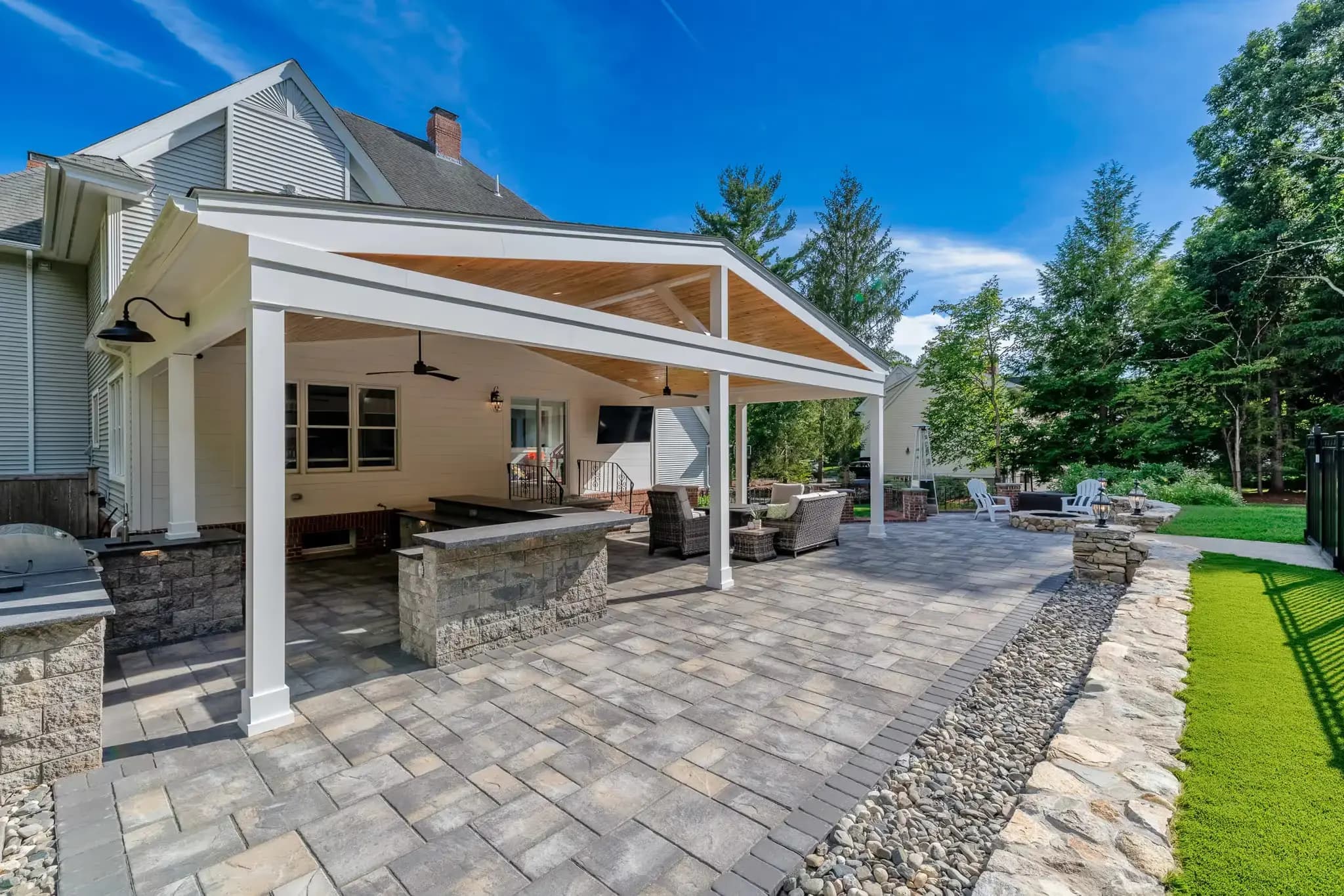
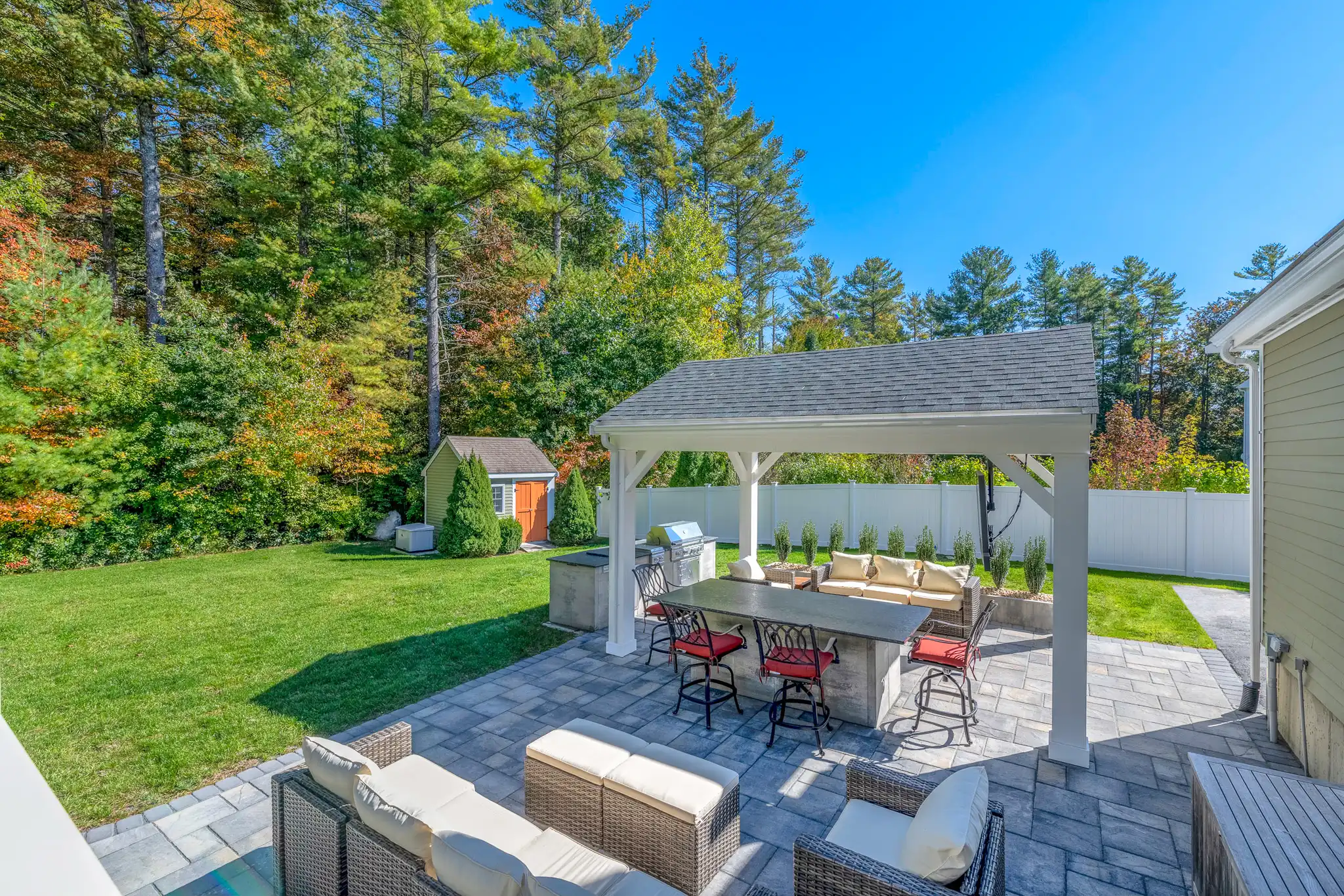
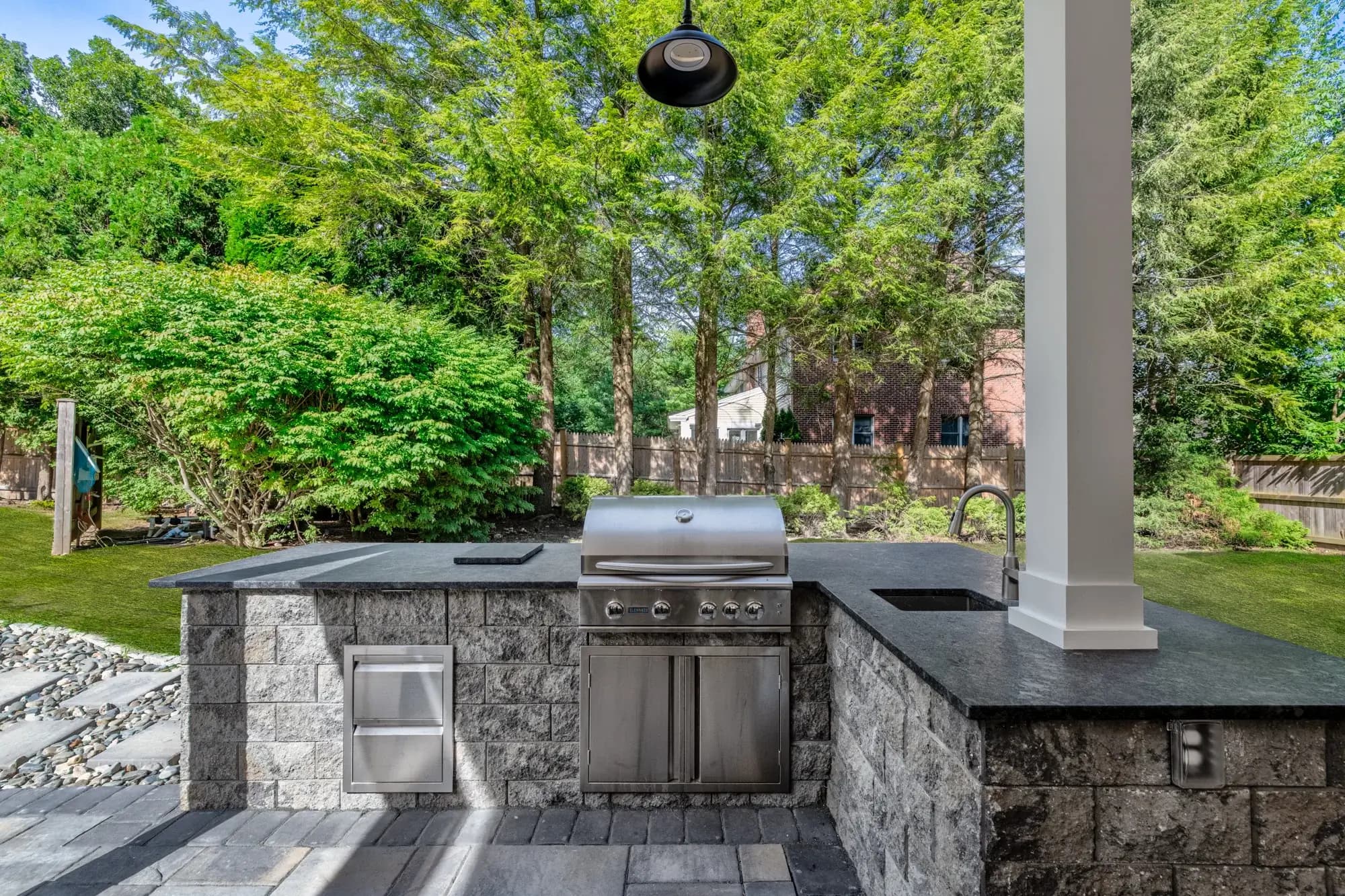
Patios Connected to Outdoor Kitchens, Pools, and Fire Pits Many homeowners use their patio as the foundation for a full outdoor living system. Outdoor kitchens, built-in fire pits, and pool surrounds can all be integrated into a paver layout from the start — or added later, since the modular nature of pavers makes expansion straightforward.
Permeable Pavers Massachusetts has stormwater regulations that can affect larger hardscape projects, especially those near wetlands or in areas with limited drainage. Permeable paver systems allow water to pass through the joints and into the base layer, reducing runoff and often satisfying local drainage requirements. They are an increasingly popular option in Easton and Bridgewater.
3D Design Renderings Before any work begins, CJ Pickering Enterprises provides 3D design renderings of your project. This lets you see exactly how your patio will look in the context of your actual yard — the layout, materials, color tones, and any connected features — before a single stone is moved.
The Installation Process: Step by Step
Step 1 — Consultation and 3D Design The process starts with a site visit and a conversation about how you plan to use the space. From there, a 3D rendering is created so you can visualize the finished project and make changes before the work begins.
Step 2 — Site Preparation and Excavation The existing sod and soil are removed to the appropriate depth — typically 8 to 12 inches for a standard patio — to make room for the base layers. Proper excavation depth is critical for drainage and long-term stability.
Step 3 — Base Layer and Compaction A compacted gravel base is installed and leveled. This is the most important part of the whole project. A well-built base prevents settling and keeps the surface flat for years. A layer of bedding sand is then screeded smooth on top before paver installation begins.
Step 4 — Paver Laying and Cutting Pavers are set by hand in the planned pattern. Cuts along the edges and around obstacles are made with a masonry saw for clean, precise lines. Edge restraints are installed along the perimeter to keep everything locked in place.
Step 5 — Sealing and Finishing Polymeric sand is swept into the joints and compacted. A penetrating sealer is applied to protect the surface, enhance the color, and prevent weed growth and staining.
Timeline: Most residential paver patio projects in the Easton area take between one and three weeks from start to finish, depending on size and complexity. Weather and permit timelines can affect the schedule, which is another reason to plan early in the season.
How Much Does a Paver Patio Cost in Massachusetts?
Paver patio installation in Massachusetts typically runs between $15 and $35 or more per square foot, all-in. That range accounts for materials, labor, base preparation, and finishing. Industry pricing data from sources like Old Station Landscape & Outdoor Masonry Supply — a South Shore supplier — puts general paver installation costs at $12 to $40 per square foot depending on material selection and project complexity.
For most homeowners in Easton and surrounding towns, a quality patio project lands somewhere between $10,000 and $30,000. Here is how the factors break down:
- Size: A small 200-square-foot patio will cost significantly less than a 600-square-foot outdoor living area with connected features.
- Material Grade: Standard concrete pavers are at the lower end; premium Belgard products with natural stone textures are at the higher end.
- Design Complexity: Simple square or rectangular layouts cost less. Curves, multi-level designs, and intricate patterns require more labor.
- Site Conditions: Sloped yards, poor drainage, or limited equipment access can add to excavation and prep costs.
Pavers also add measurable value to your home. Real estate data consistently shows that quality outdoor living improvements deliver strong returns at resale — particularly in markets like Easton and Canton where buyers expect well-finished properties.
What to Look for in a Patio Contractor Near Easton, MA
Not all patio contractors are equal, and the difference shows up in the finished product years down the road. Here is what to look for when comparing options on the South Shore.
Belgard Master Craftsman Certification This is the highest level of certification Belgard awards to contractors. To earn it, a contractor must have five-plus years of experience, win industry awards, install significant square footage of Belgard products each year, attend ongoing education, and back their work with a five-year workmanship guarantee. It is not a designation that can be purchased — it has to be earned and maintained annually.
Insurance and Licensing Any contractor working on your property in Massachusetts should carry general liability insurance and workers’ compensation. Ask for documentation before signing anything.
References and Past Work Ask to see photos of completed projects — ideally jobs similar in scope to what you are planning. A contractor who has worked extensively in Easton, Mansfield, Stoughton, and other South Shore towns will understand the local soil conditions, typical drainage challenges, and permit requirements.
3D Design Process A contractor who offers 3D renderings before breaking ground is showing you something important about how they work. It signals a structured, professional process and gives you a clear way to communicate what you want before the project begins.
Ready to Build Your Dream Patio in Easton, MA?
CJ Pickering Enterprises is a Belgard Master Craftsman contractor based in South Easton, Massachusetts, serving homeowners throughout the South Shore — including Easton, Canton, Stoughton, Mansfield, Bridgewater, and surrounding communities. Owner Cody Pickering brings more than 10 years of hands-on hardscape experience to every project.
Every project starts with a free consultation and a 3D design rendering, so you know exactly what you are getting before work begins. Whether you are starting with a simple patio or planning a full outdoor living space with a kitchen, fire pit, and lighting, CJ Pickering has the experience and certification to get it done right.
Call 774-362-0482 or visit cjpickeringent.com to schedule your free consultation.